
I visited Rousham in May, before the record heat of the summer of 2026 lay waste to many gardens in the south of England. It had been on my bucket list for a long time, not that I knew much about it other than it is cited by many garden designers and garden critics, including Tim Richardson, Tom Stuart-Smith, Dan Pearson and Monty Don, as the most important, magical or inspirational garden they know. During our visit we ran into Nan Quick from the USA, an inveterate international garden visitor, who also rated it as one of her favourite gardens. So, really, is that good?
Why critics rate it so highly
At Rousham, Kent did not just plant trees; he used his background as a stage and theatrical designer to create an unfolding story:
The Living Canvas
He treated the landscape like a painting, using shades of green, light, and shadow instead of colourful flower borders. [1, 2]
The Dramatic Route
He cleverly designed paths that force visitors to turn corners and suddenly discover classical Roman statues, hidden glades, or architectural follies like the Praeneste Terrace and Venus’s Vale.
Borrowing the Countryside
He masterfully integrated the River Cherwell and the nearby fields—even designing a "sham ruin" (The Eyecatcher) on a distant hill—to make the small garden feel infinite.
It survives largely intact
William Kent laid it out around 1737-41 for General James Dormer, and it has changed far less than his other gardens at Stowe and Stourhead. Writers such as Christopher Hussey and Tim Richardson treat it as the best place to experience Kent's work as he intended it.
Horace Walpole famously said Kent "leaped the fence" and saw that all nature was a garden. Critics see Rousham as the clearest demonstration of that, with its blurred boundaries, borrowed views over the Cherwell valley, and eyecatchers such as the sham ruin on the far hillside.
Alexander Pope, not just a poet apparently, but also an influential arbiter of garden taste, visited and admired it. Mavis Batey, a noted garden historian, and others have connected its sensibility to Pope's ideas about nature, gardens and classical allusion.
What are the key features of Rousham?
The sequence of scenes you walk through when visiting Rousham seems to be the key to its lofty position amongst the best British gardens. So its features are best described in the order a visitor meets them, though perversely this is not strictly the order in which we travelled round the garden.
The setting and approach
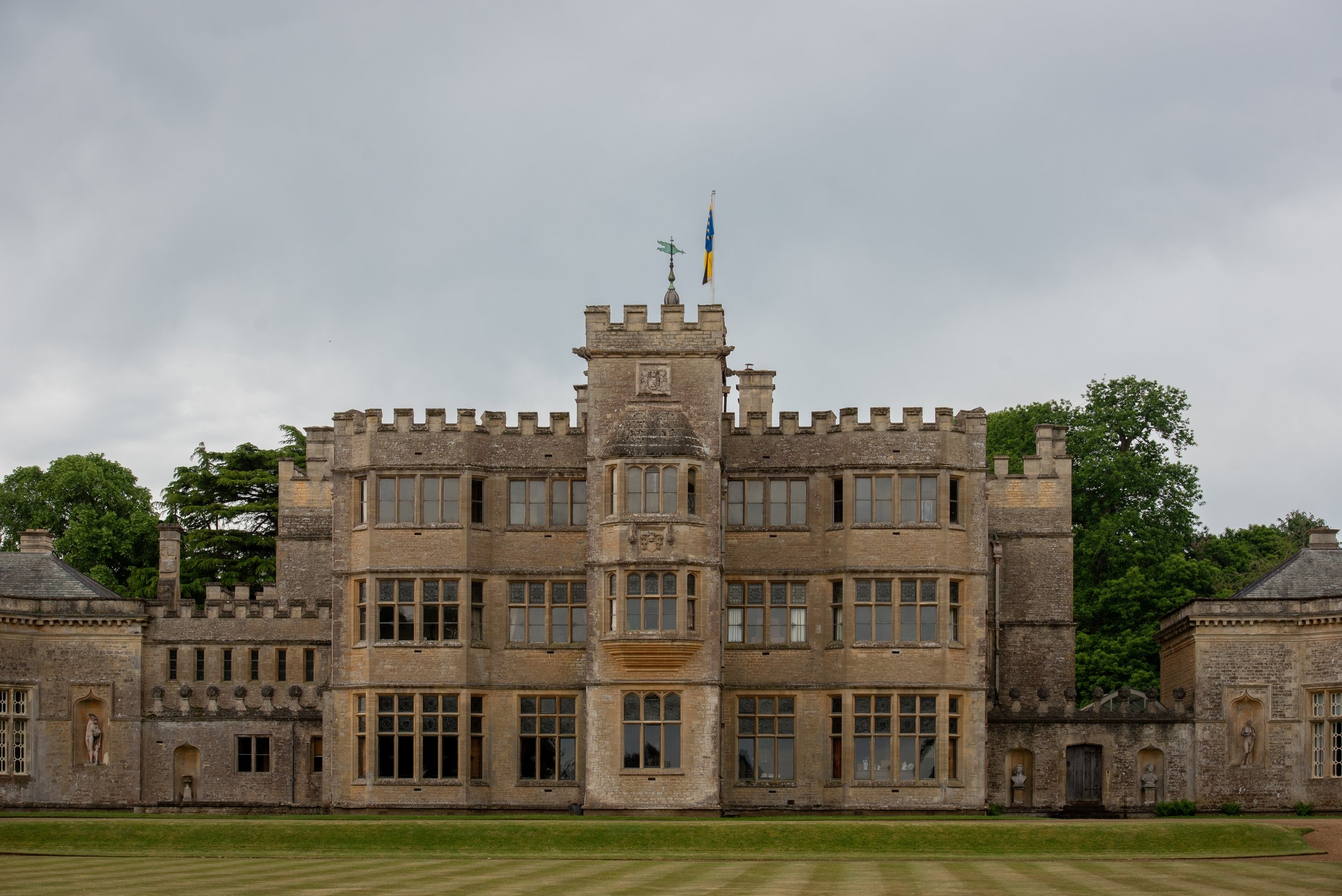
The main house
The house and stable block
The house is Jacobean, and Kent added wings and the Gothic stable block. The garden is hidden from the house, and you enter through the stable block.
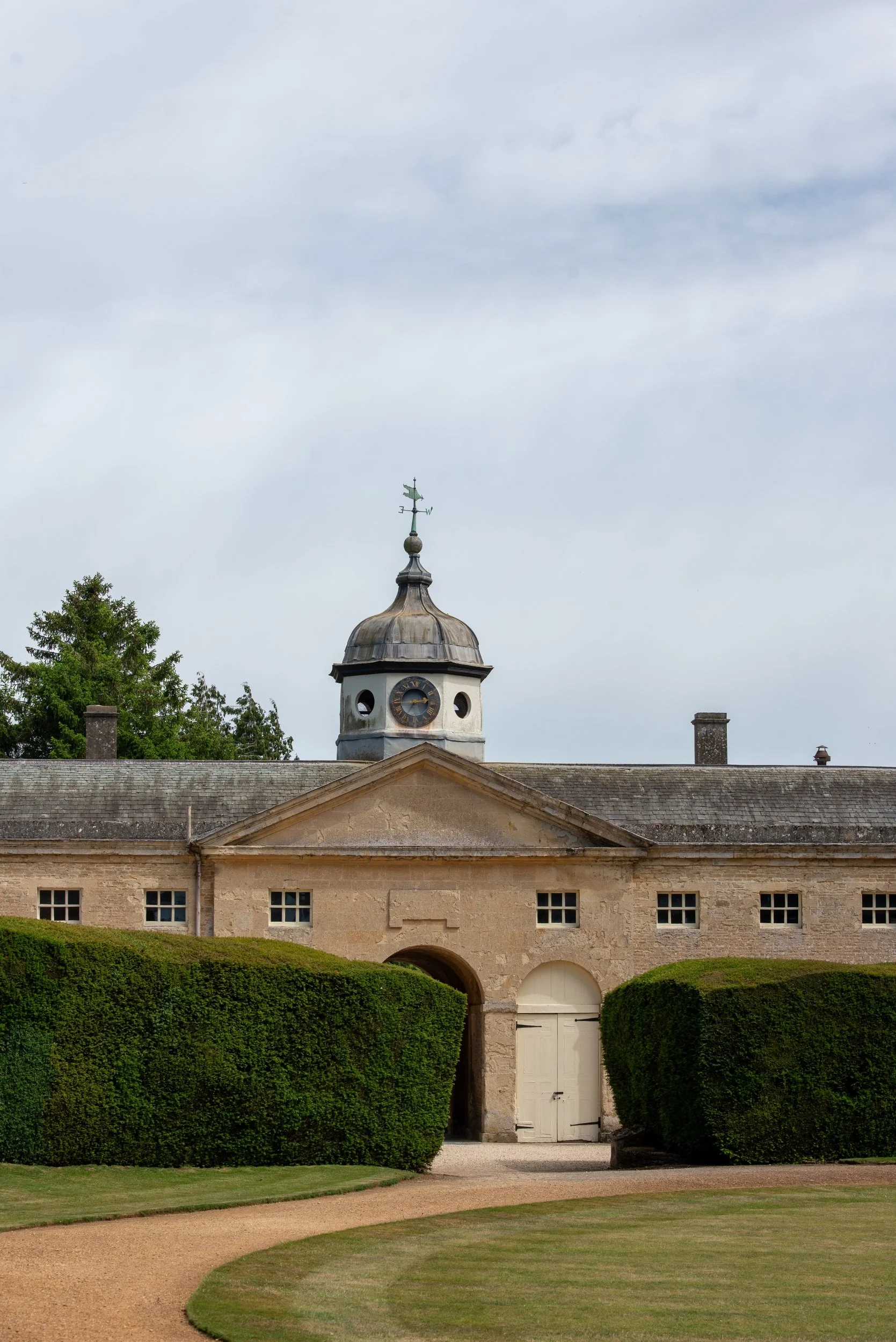
The stable block
The bowling green
This is part of Charles Bridgeman's earlier layout, which Kent kept and adapted. It's the first big view over the Cherwell valley though you can’t see the river until you reach the statue.
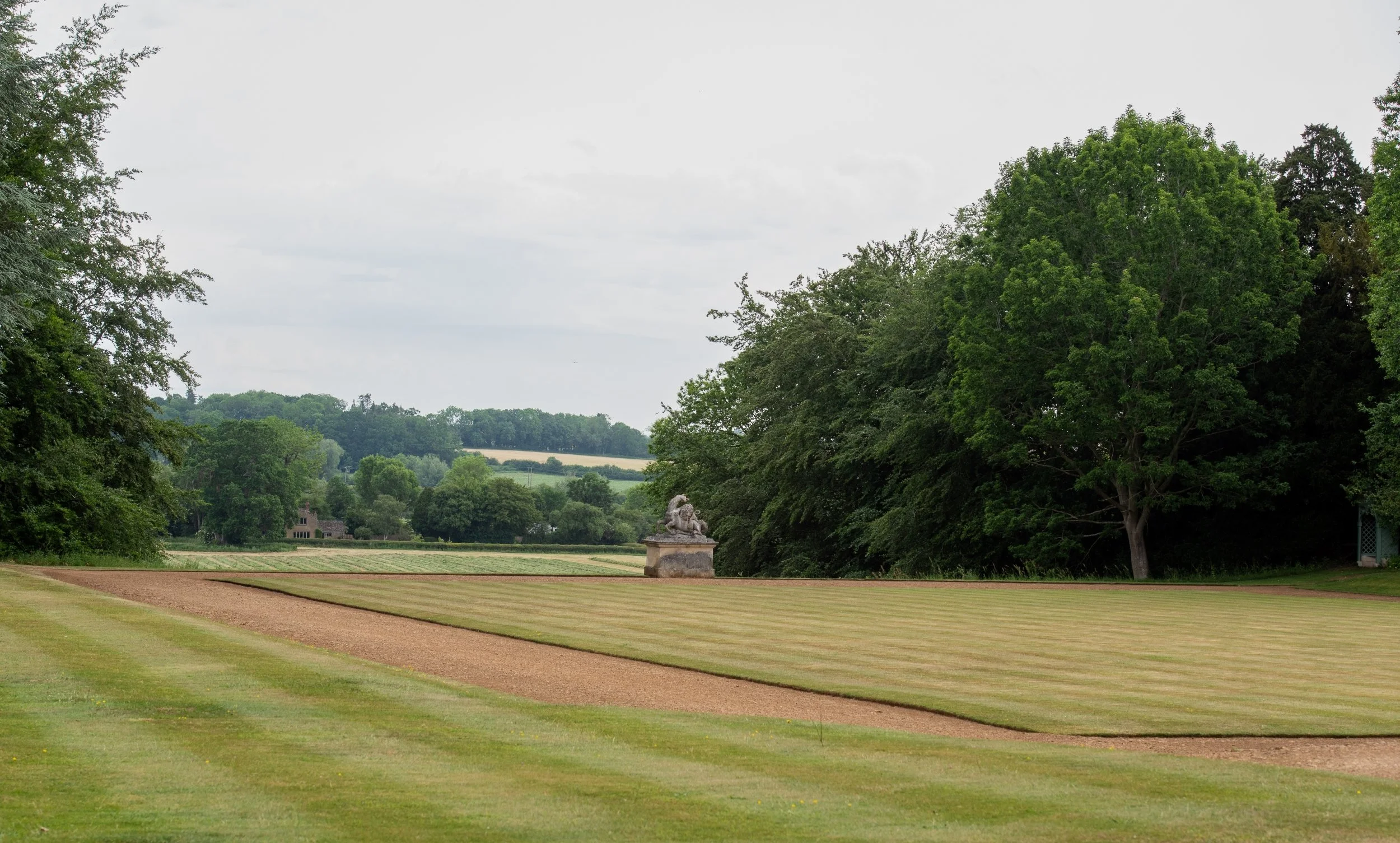
The bowling green and views across the Cherwell valley. In the centre is the statue Lion Attacking a Horse by Peter Scheemakers
Statuary
The Dying Gladiator and Lion Attacking a Horse. These statues are by Peter Scheemakers, an 18th century Flemish sculptor (most famous for his statue of Shakespeare in Westminster Abbey) placed as focal points at the ends of vistas.
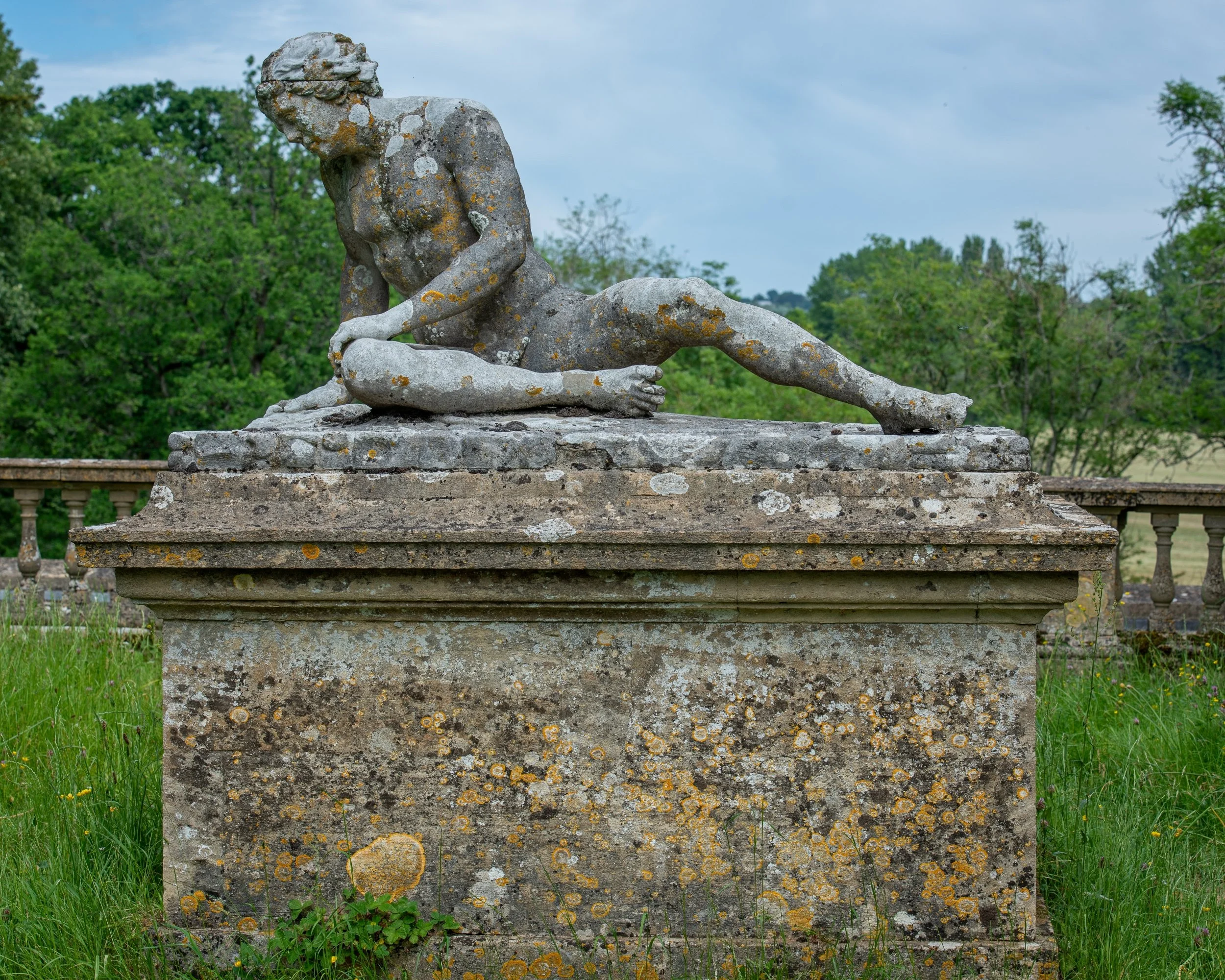
The Dying Gladiator by Peter Scheemakers, sited atop the Praeneste terrace
The main scenes
The Praeneste terrace
A raised terrace with an arcade of seven arches, based on the Roman Temple of Fortune at Praeneste (Palestrina) in Italy. It looks out over the river and the countryside. it is a lovely view and can be enjoyed in bad weather - a good spot for a picnic if you brought one.
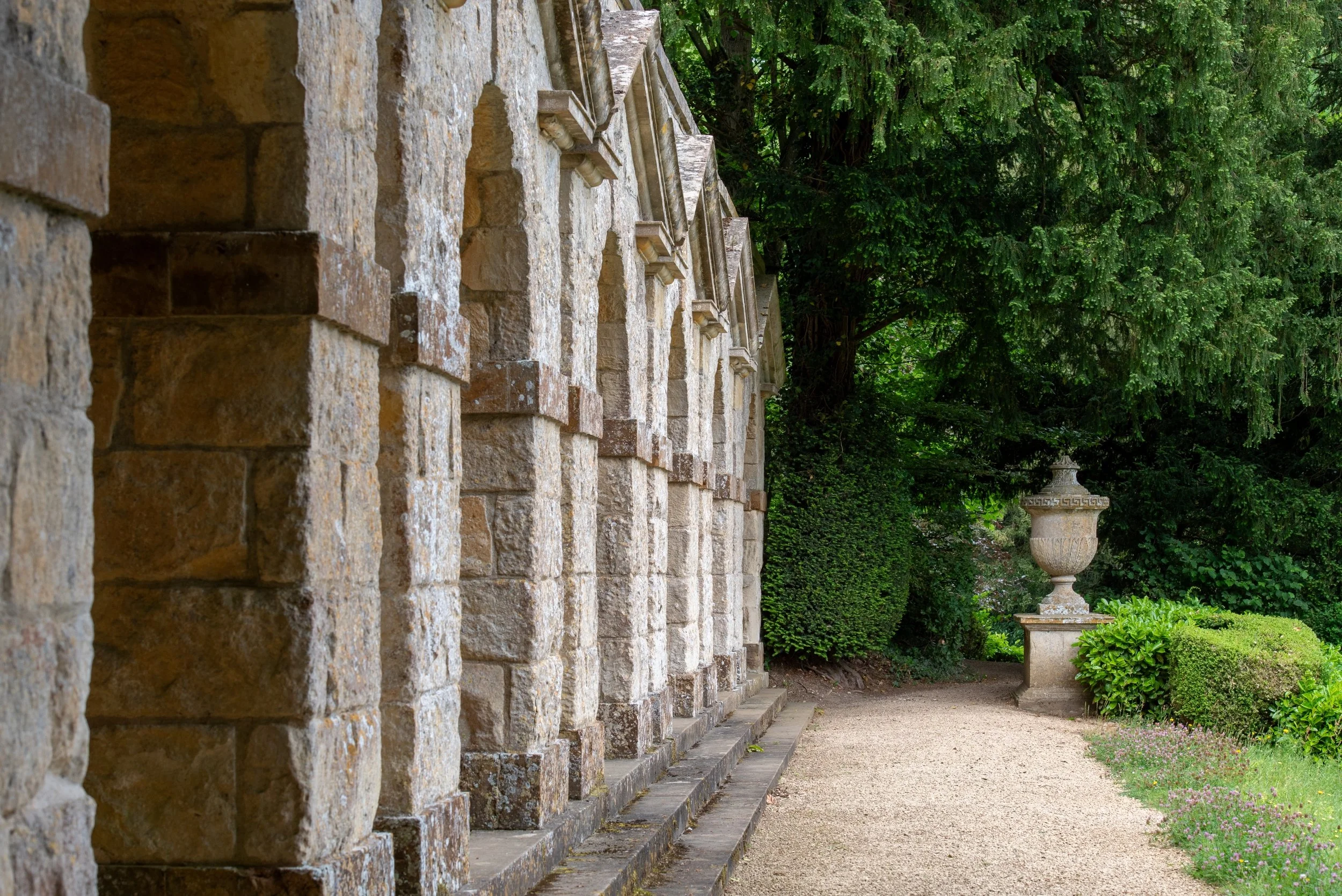
The Praeneste terrace
The Vale of Venus
A secluded, wooded valley with a series of cascades, pools, and a statue of Venus. Many critics consider it the heart of the garden. Unfortunately there was no cascade during our visit and, compared to other great gardens (I’m thinking of Chatsworth), it would be rather a modest one.
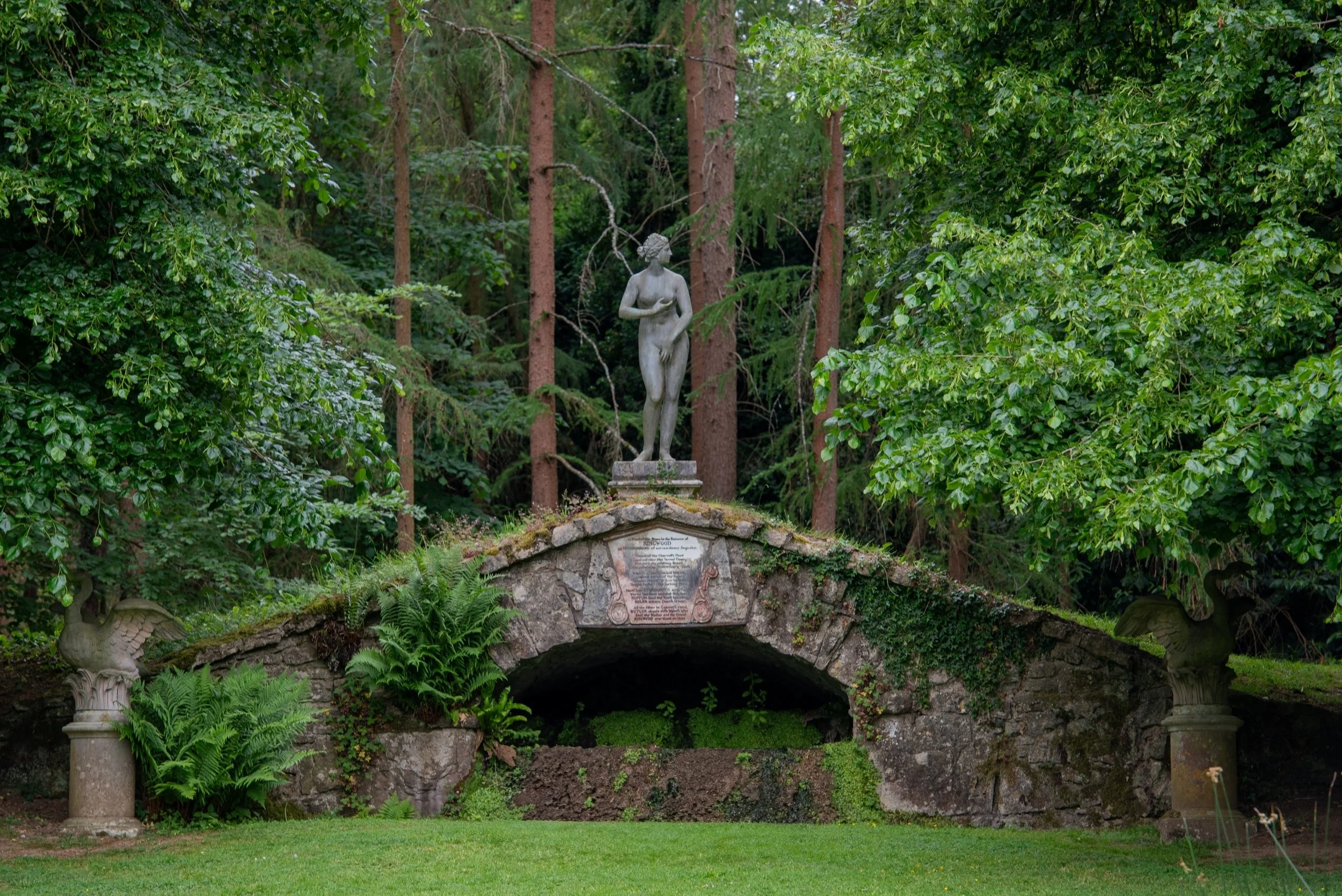
The Vale of Venus
The Temple of Echo
A small classical pavilion with a view across the Cherwell. How did I miss that?
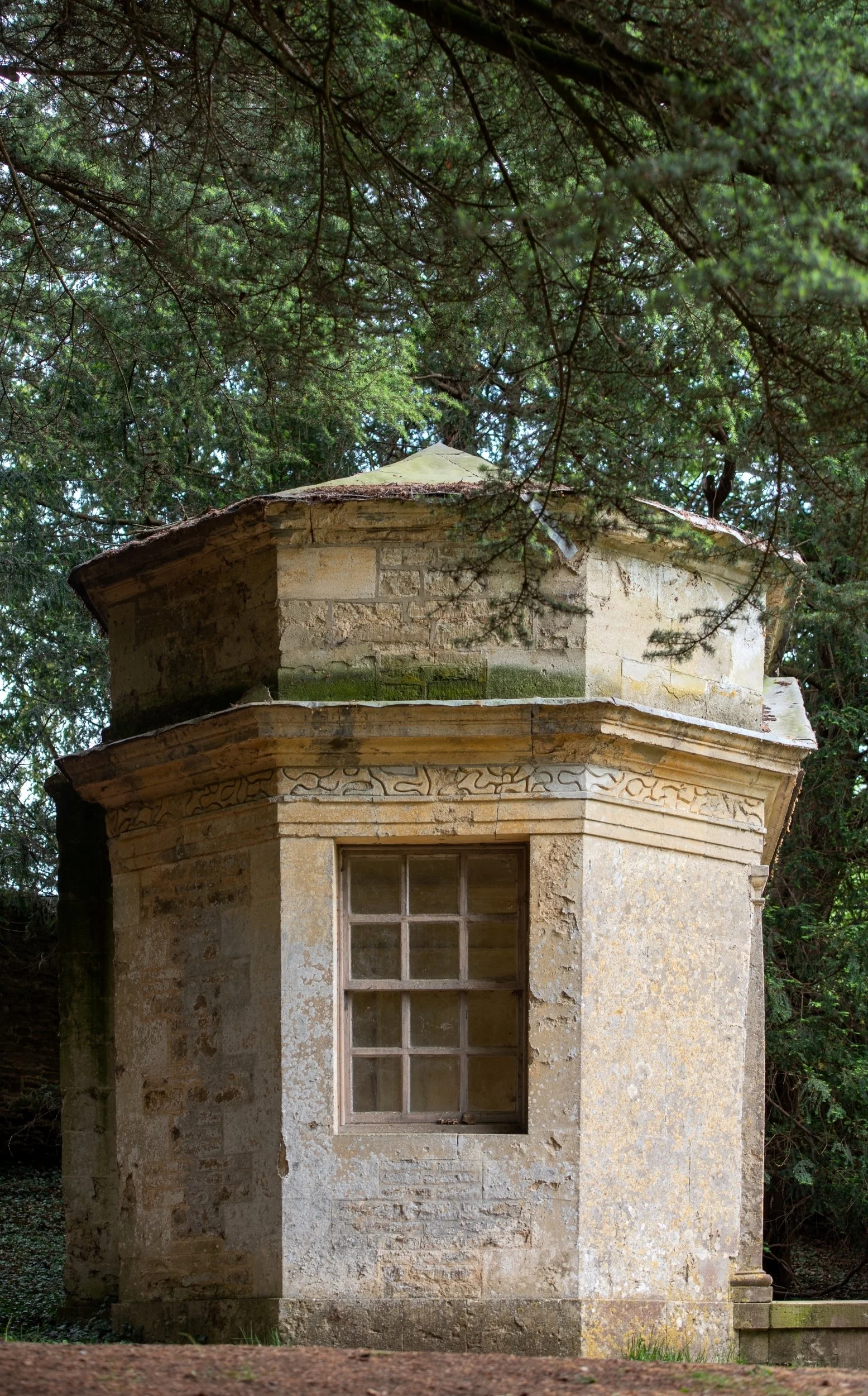
Townesend's Building
A small garden building, often recorded as a tribute to the mason who worked on the house. Not as good a spot for a picnic as the Praeneste Terrace, but good for shelter and there is a bench,
The serpentine rill
A winding water channel that Arne Maynard described as leading you through the garden "as if by the hand". This is the only thing I knew about Rousham beforehand. I imagine in its day it was quite an innovation. It’s a very simple rill which is probably part of its enduring appeal, no riffles or waterfalls and no ducking under adjacent foliage, but its serpentine route begs to be followed as it can’t be seen all in one view.
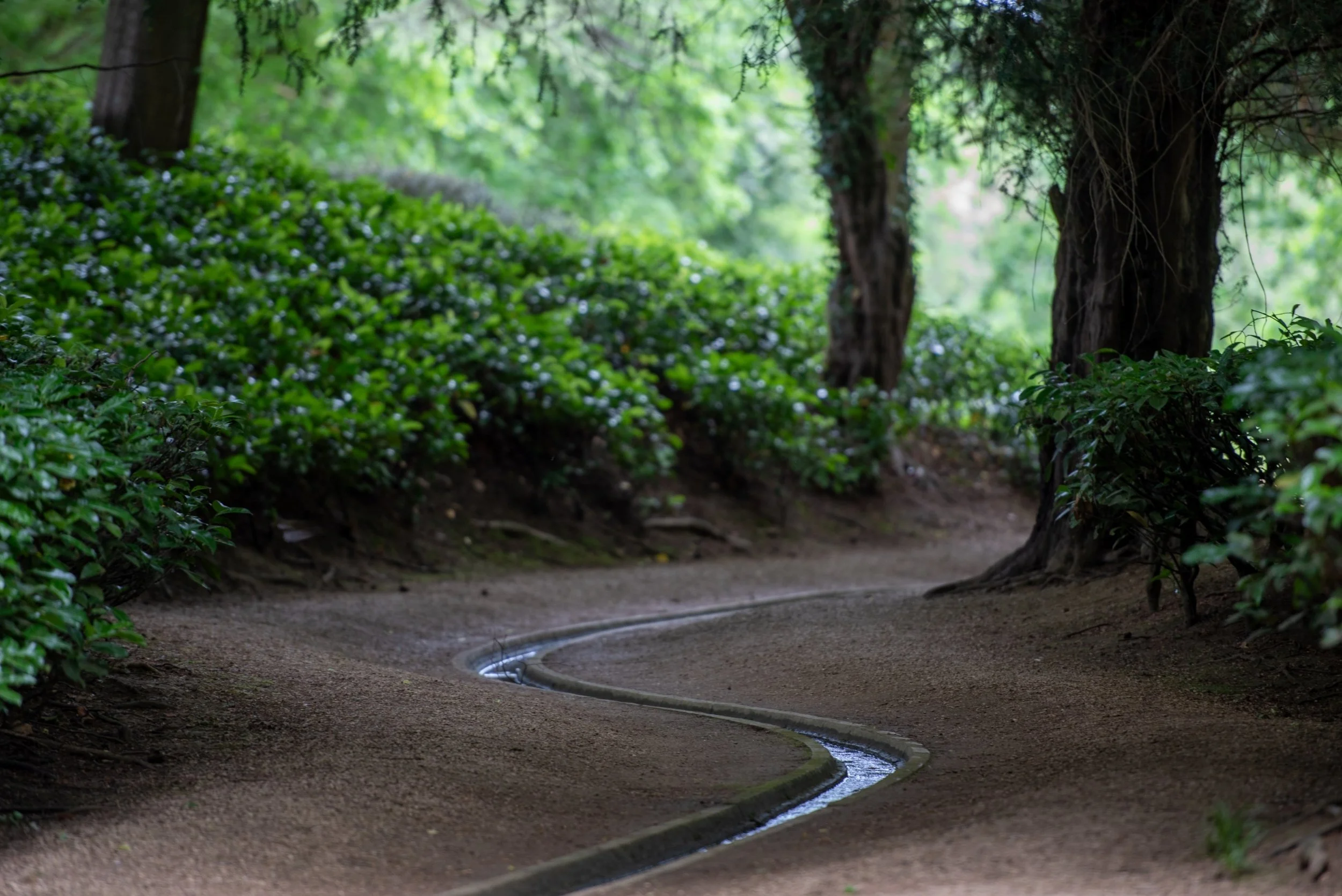
That rill
Statuary and ancient groves
Statues of gods, classical motifs and mythical creatures stand in glades and along shaded walks, creating a classical, Arcadian atmosphere. Those with an old-fashioned education might recognise most of them, including Pan, Mercury, Apollo, various nymphs and satyrs and there are Roman busts in the niches in the Praeneste Terrace.
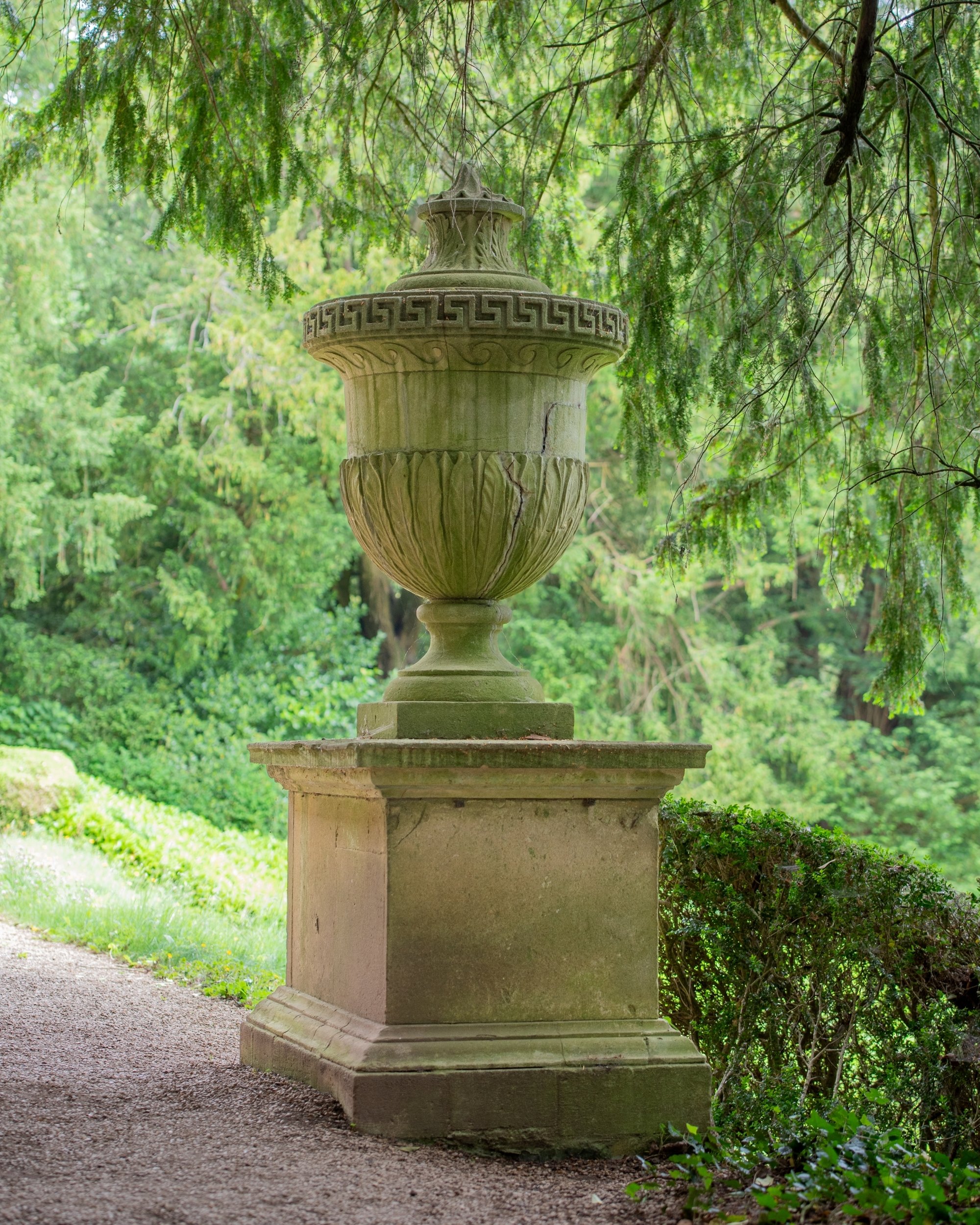
Designed by William Kent, this is one of a pair of carved urns near the Praeneste Terrace.
Views and boundaries
The Eyecatcher
A sham ruin on the hillside beyond the river, positioned to draw the eye out of the garden and into the landscape. It seems I missed it - not so eye-catching then…
Blurred boundaries
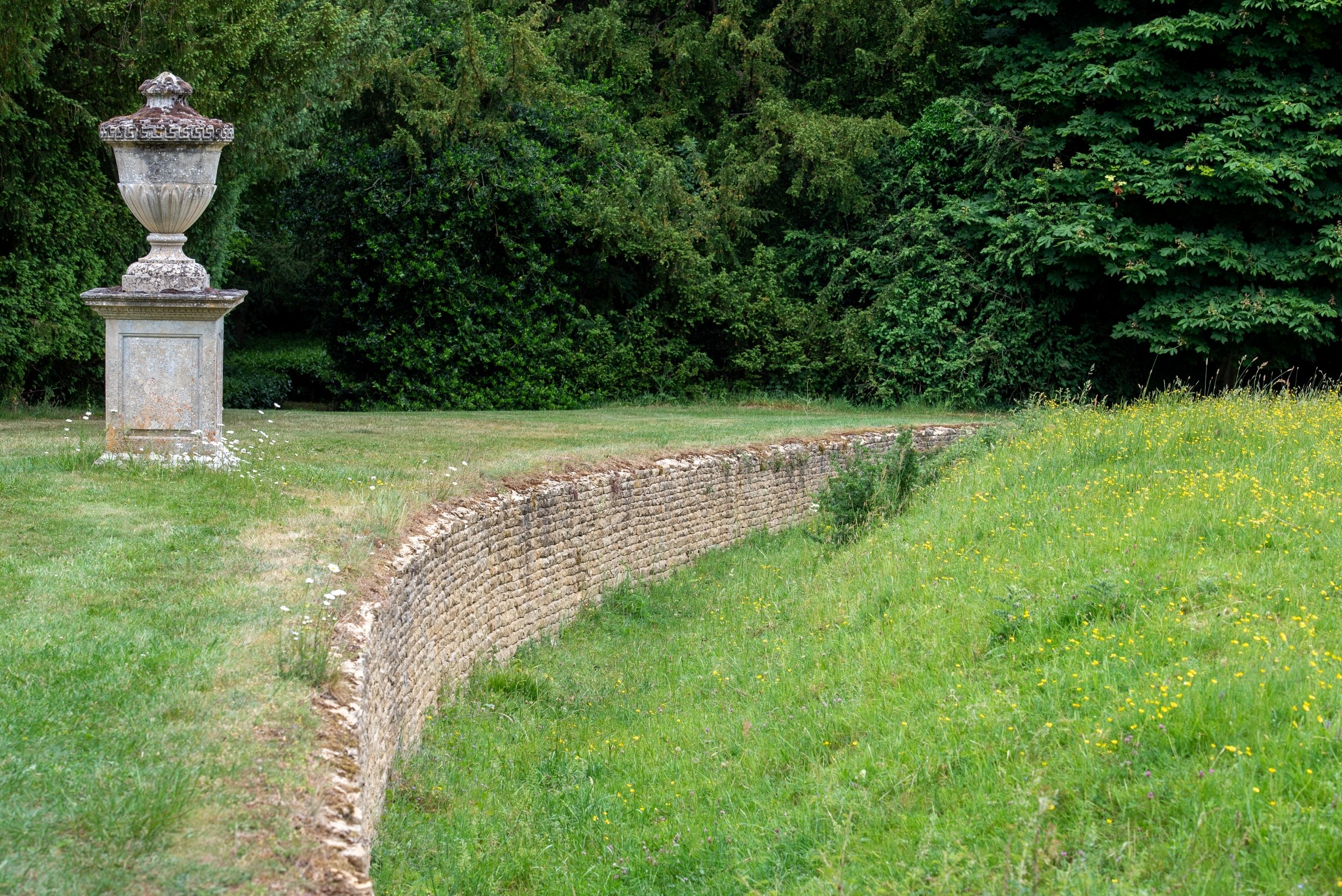
A ha-ha and careful siting make the grazing cattle, fields, and river valley appear to be part of the garden. This is the idea behind Walpole's "leaped the fence" remark about Kent. In spite of popular opinion the Ha Ha was invented in France, but Kent used it many times in his British gardens.
The English longhorn cattle
They graze in the grounds and definitely enhance Kent’s Arcadian vision. They were a popular breed in the 18th century before declining to become very rare. They are now prized for their meat and their ability to do well in a variety of different habitats, so much so they are valued for conservation grazing. They are the largest of the British native breeds.
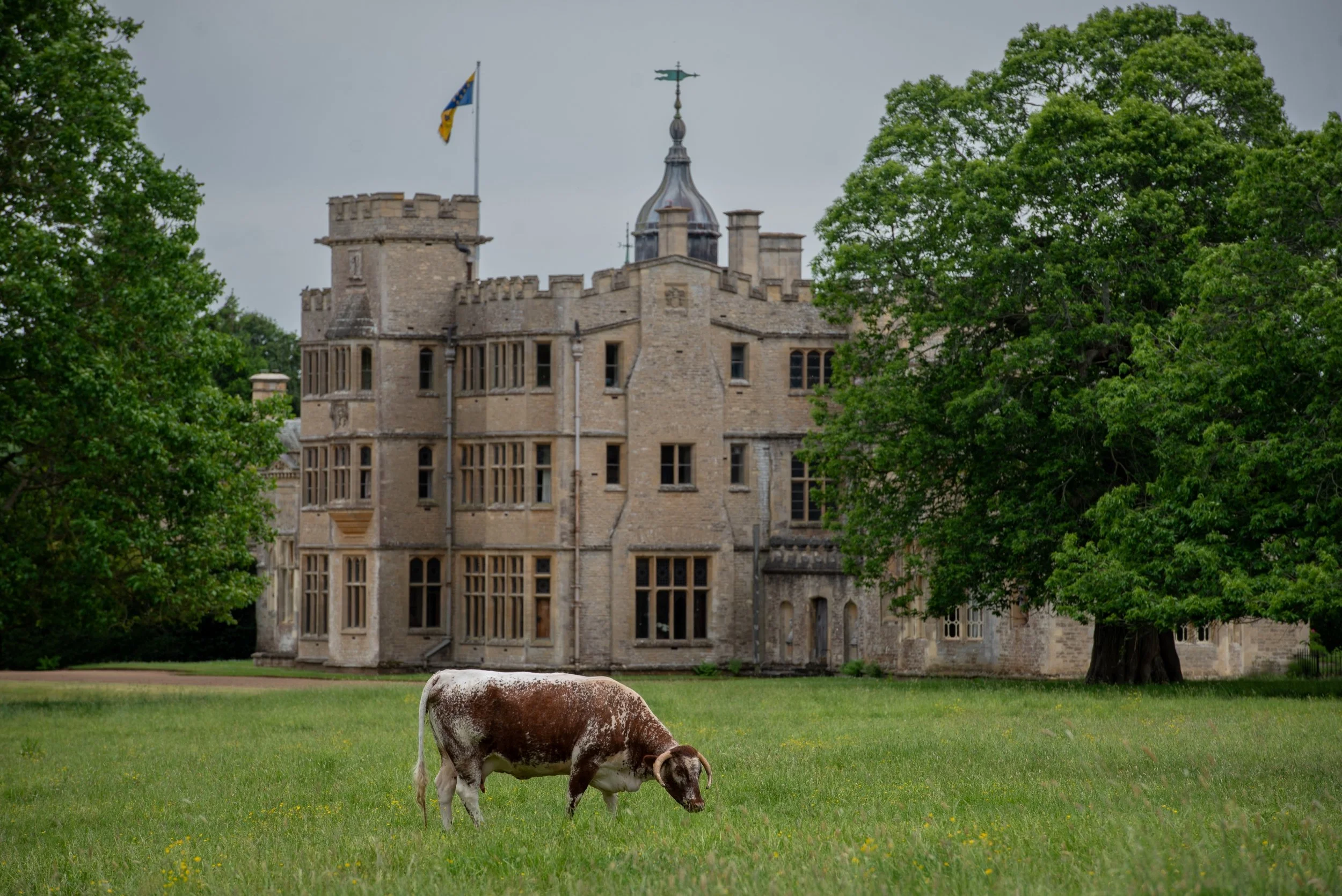
Longhorn cattle
The walled garden
The seventeenth-century walled garden is complete with espaliers, herbaceous borders, a small parterre, and a pigeon house. It's the only part of Rousham with a flowery, ornamental character. For most visitors this is the easiest and most familiar design of garden to understand.
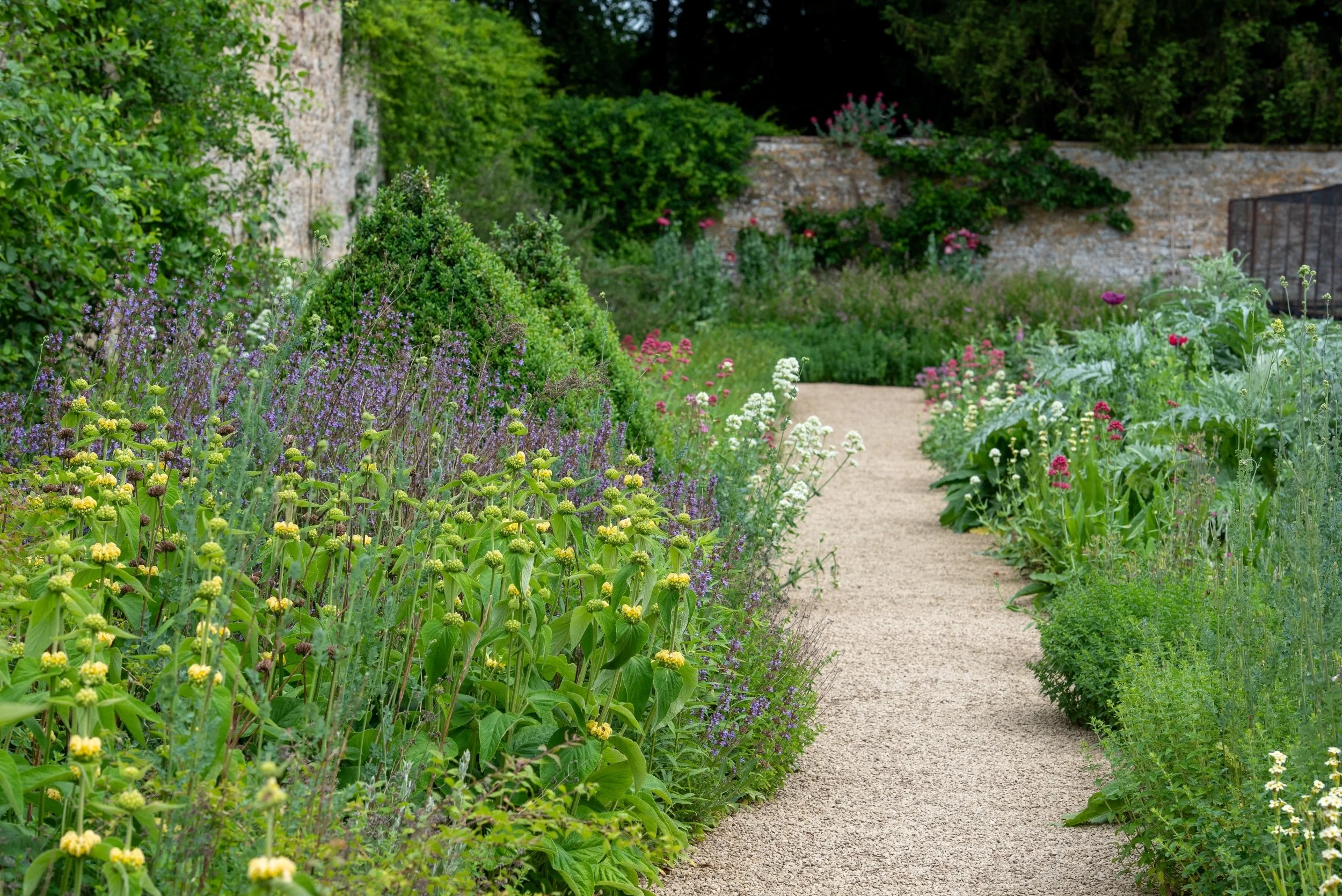
The walled garden
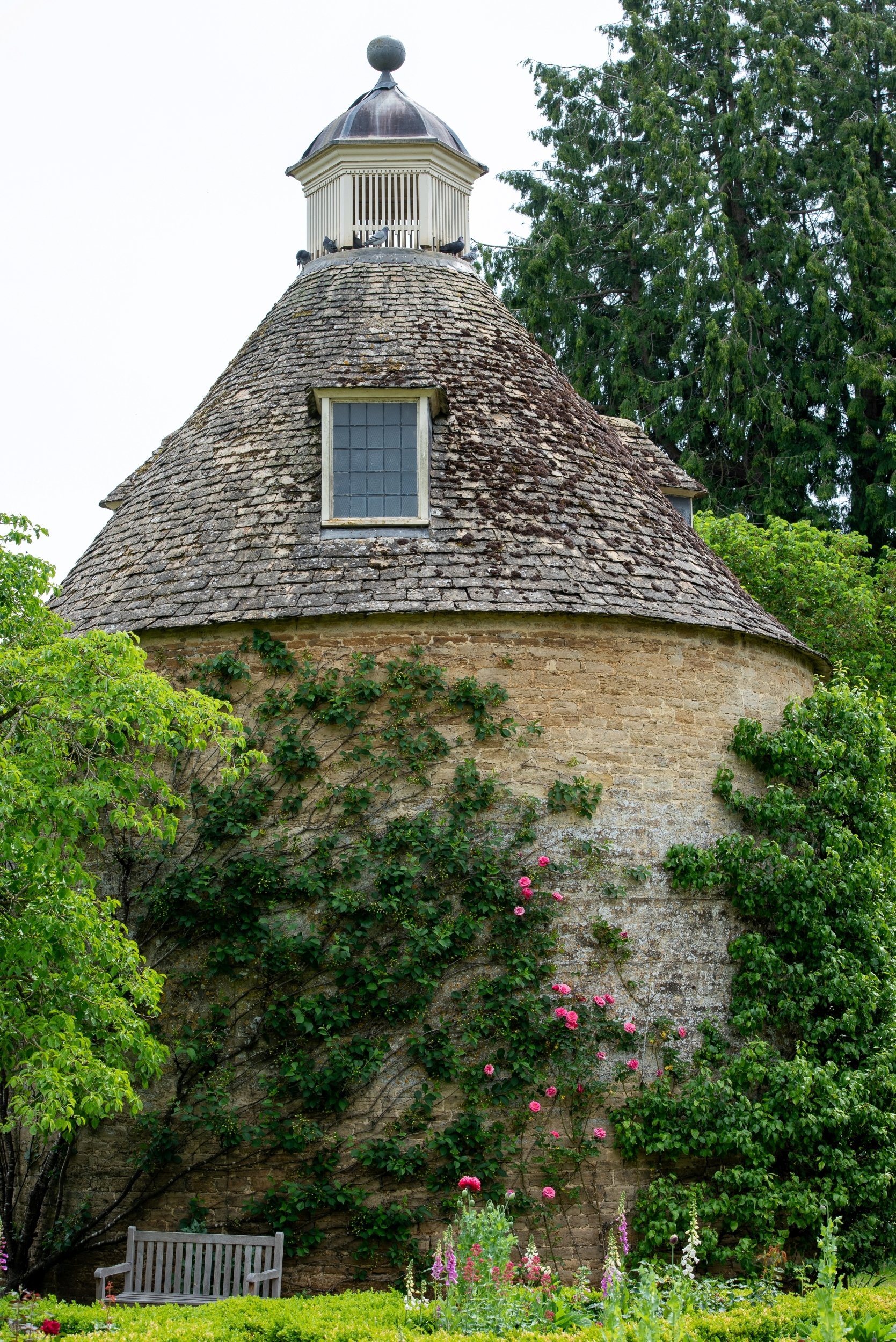
The pigeon house and dovecote
What do the critics argue about?
Iconography
John Dixon Hunt and others have read the garden as a carefully planned classical narrative, drawing on Virgil, Roman landscape painting and Claude. Other scholars think this over-reads the evidence, since Kent left no programme and the layout also evolved with practical changes.
Authorship and later changes
Some of what visitors see reflects later alterations, such as the walled garden and planting changes. Critics sometimes point out that Kent's original intentions are partly reconstructed, particularly in the planting.
Subtlety
A few writers note that Rousham can seem modest or even underwhelming to visitors expecting the drama of Stowe or the polish of Stourhead. Its virtues are quiet, and it rewards slow attention
About William Kent
William Kent (c. 1685-1748) was an English architect, painter, and landscape designer, and a central figure in Georgian taste. He is best known for helping invent the English landscape garden, though he worked across many fields. He worked on Holkham Hall in Norfolk, Horse Guards in Whitehall and Devonshire House. It was applying his painterly eye to landscapes, starting at Chiswick House in London, that enabled his transition to garden design.
Other projects include Stowe, Claremont Landscape Garden, Kew Gardens, Kensington Gardens and Alexander Pope’s own garden in Twickenham. But Rousham is considered his best garden as it represents his complete vision and is largely unchanged.
I think I belonged in the category of an underwhelmed visitor. Having done a fair bit of research for this article I have a better understanding of why it is as it is. Another visit is required methinks.
Notes to visitors
This is definitely a garden to take your time visiting. If you’re in a rush to tick it off a list you will miss the point.
There are no catering facilities here whatsoever, so a picnic is essential. The loos are in the stable block and it can be a long walk back from some parts of the garden.