
Snowdrops at Welford Park
Famous for its snowdrop displays as well as Bake-Off
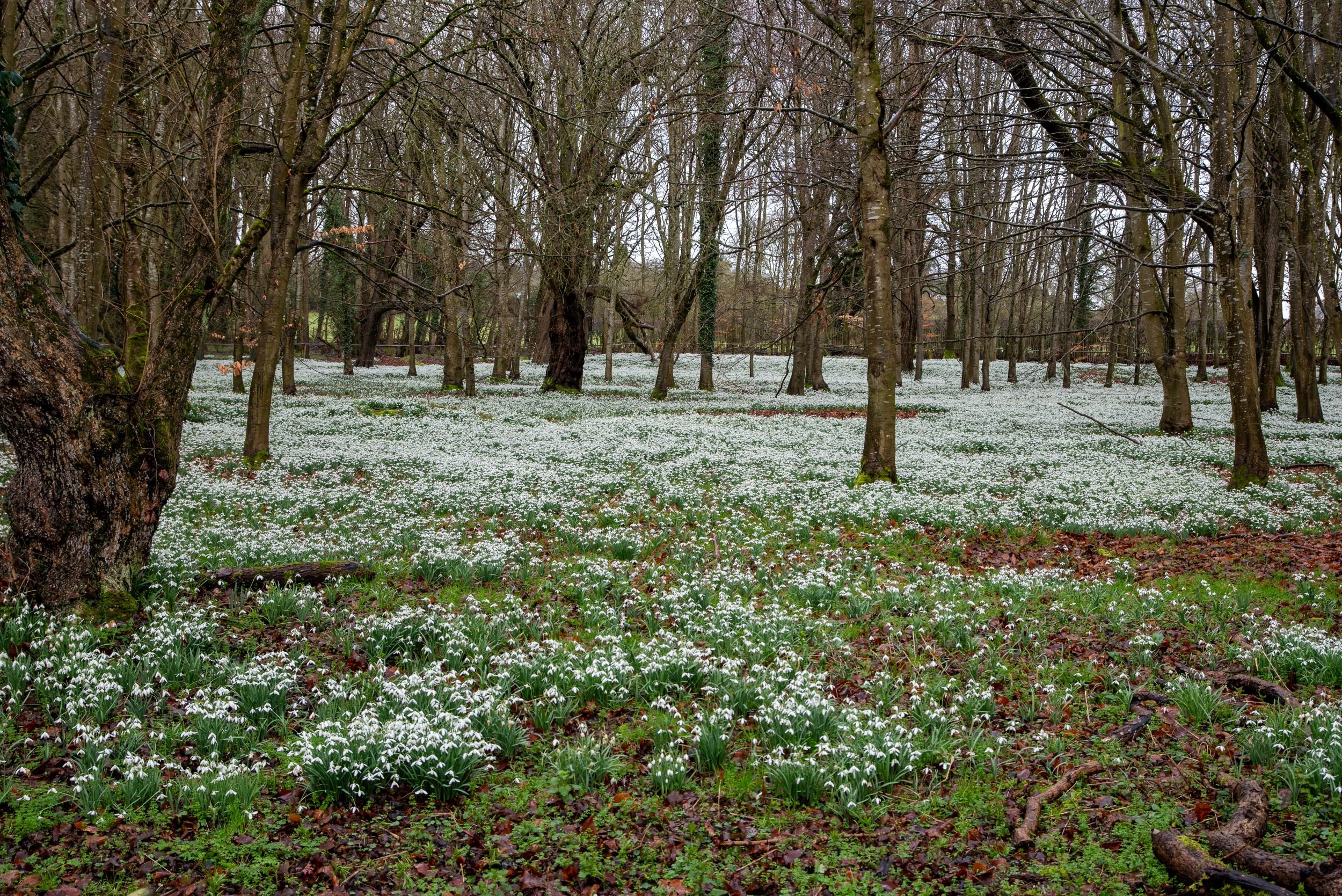
Right now Welford Park near Newbury in West Berkshire, is probably better known as the location for the Great British Bake-Off. But it is also famous for its amazing displays of snowdrops from December through to the end of March.
A bit of history
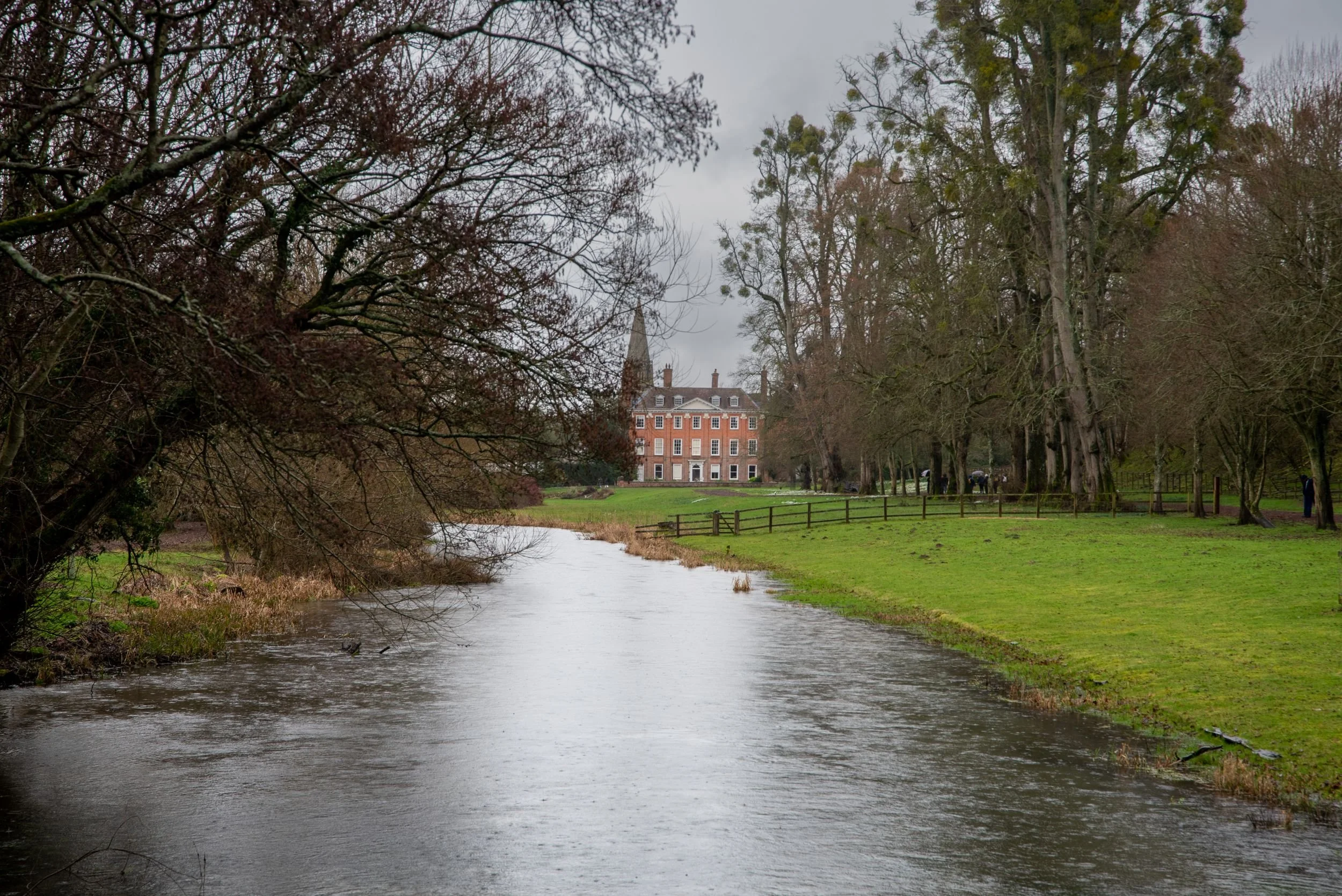
The house and estate have a long history, originating as a monastery under the monks of Abingdon. Henry VIII took possession in 1536 on the dissolution of the monasteries, kept it as a deer hunting lodge before granting it to a courtier, Sir Thomas Parry.
His son sold it in 1618 to Sir Francis Jones, one time Lord Mayor of London. It has been in his family ever since, although a shortage of male heirs over many generations has meant its inheritance has been convoluted. It is still lived in by distant descendants.
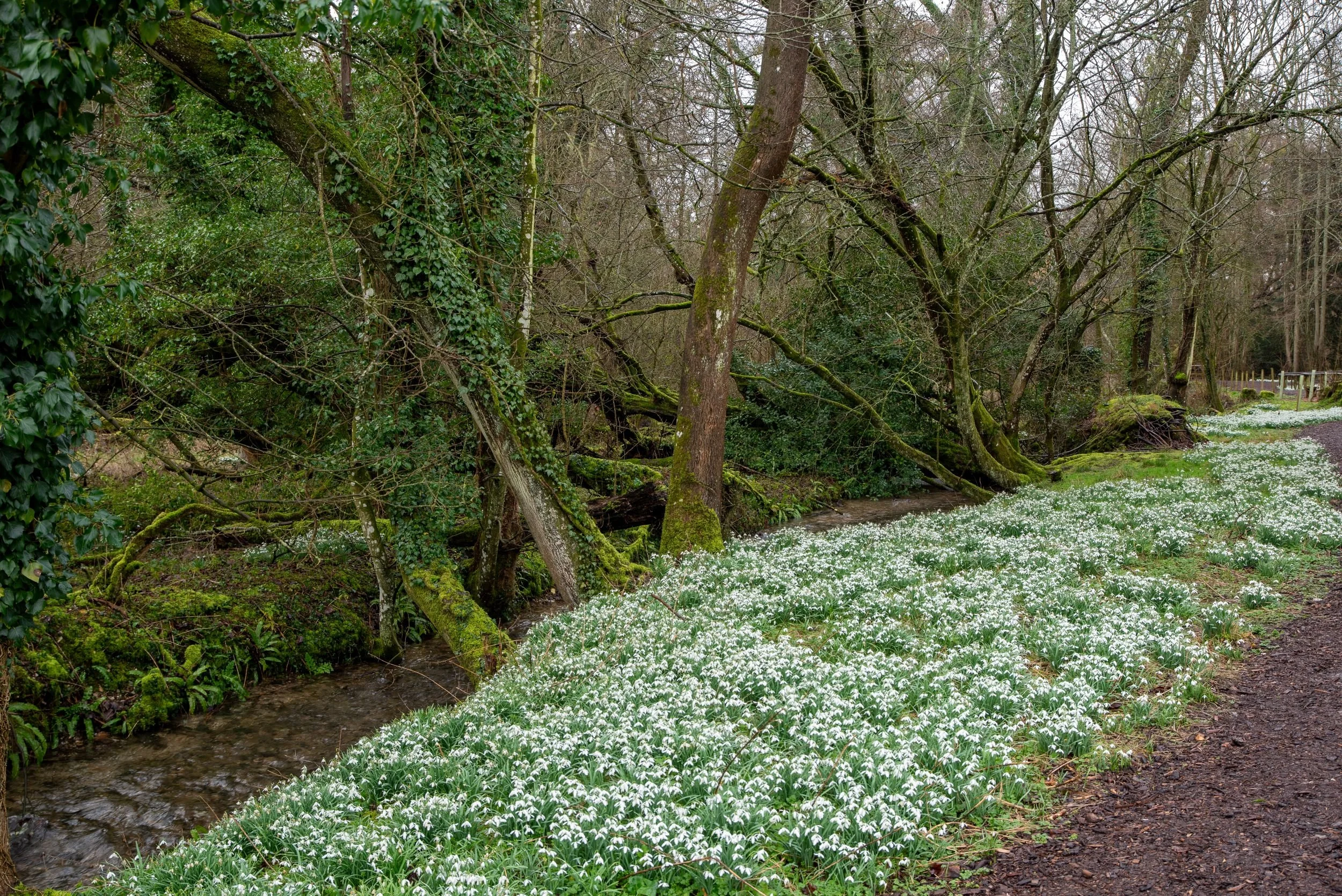
Snowdrops are not native to the UK but over centuries have become naturalised. Most originated in monasteries, imported from Europe and planted by Norman monks to decorate churches for Candelmas and planted in graveyards to sanctify souls. They were also used as herbal remedies for headaches. Some of the biggest displays of snowdrops in the UK are at former Norman monastic sites, and Welford Park is one of the largest of those.
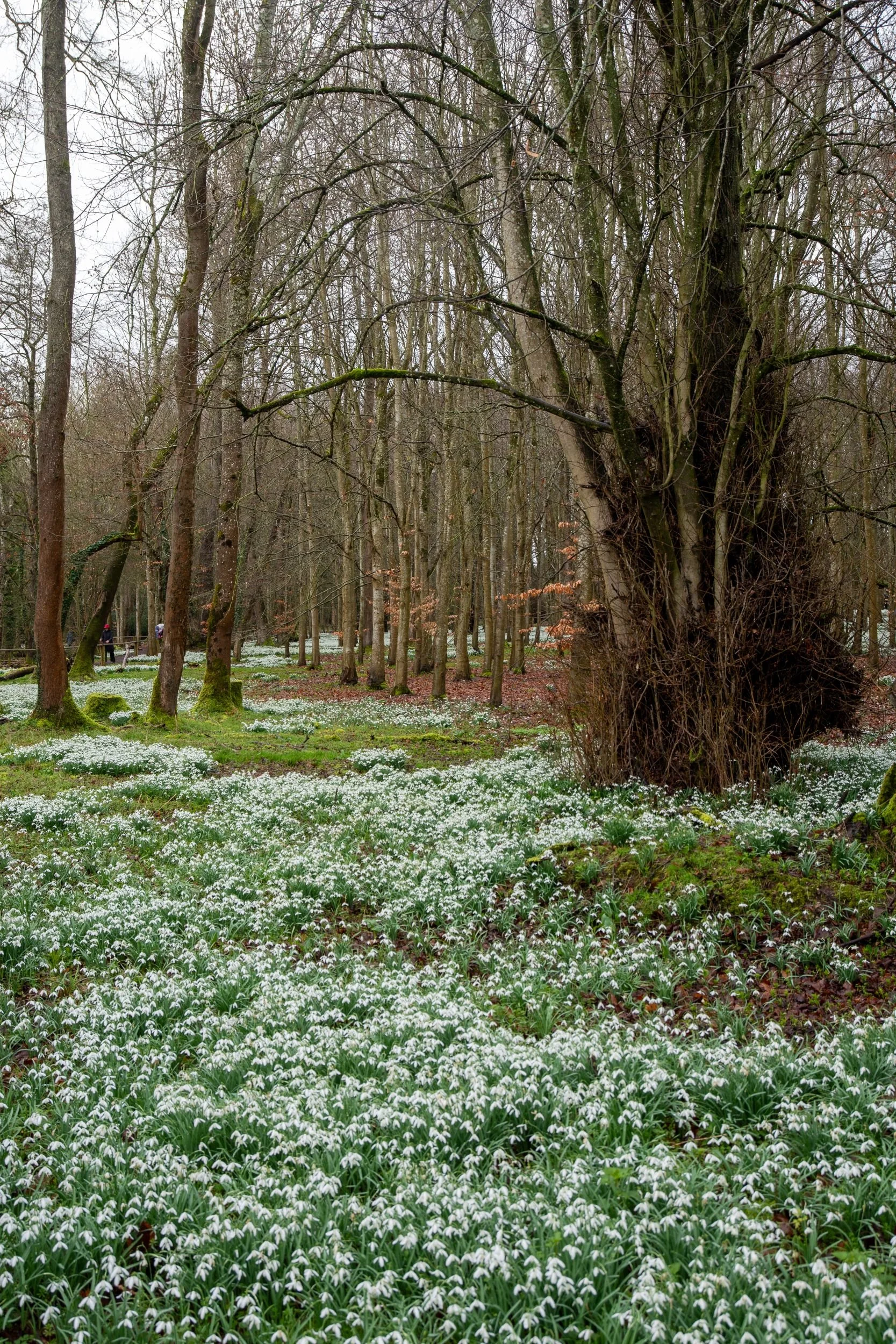
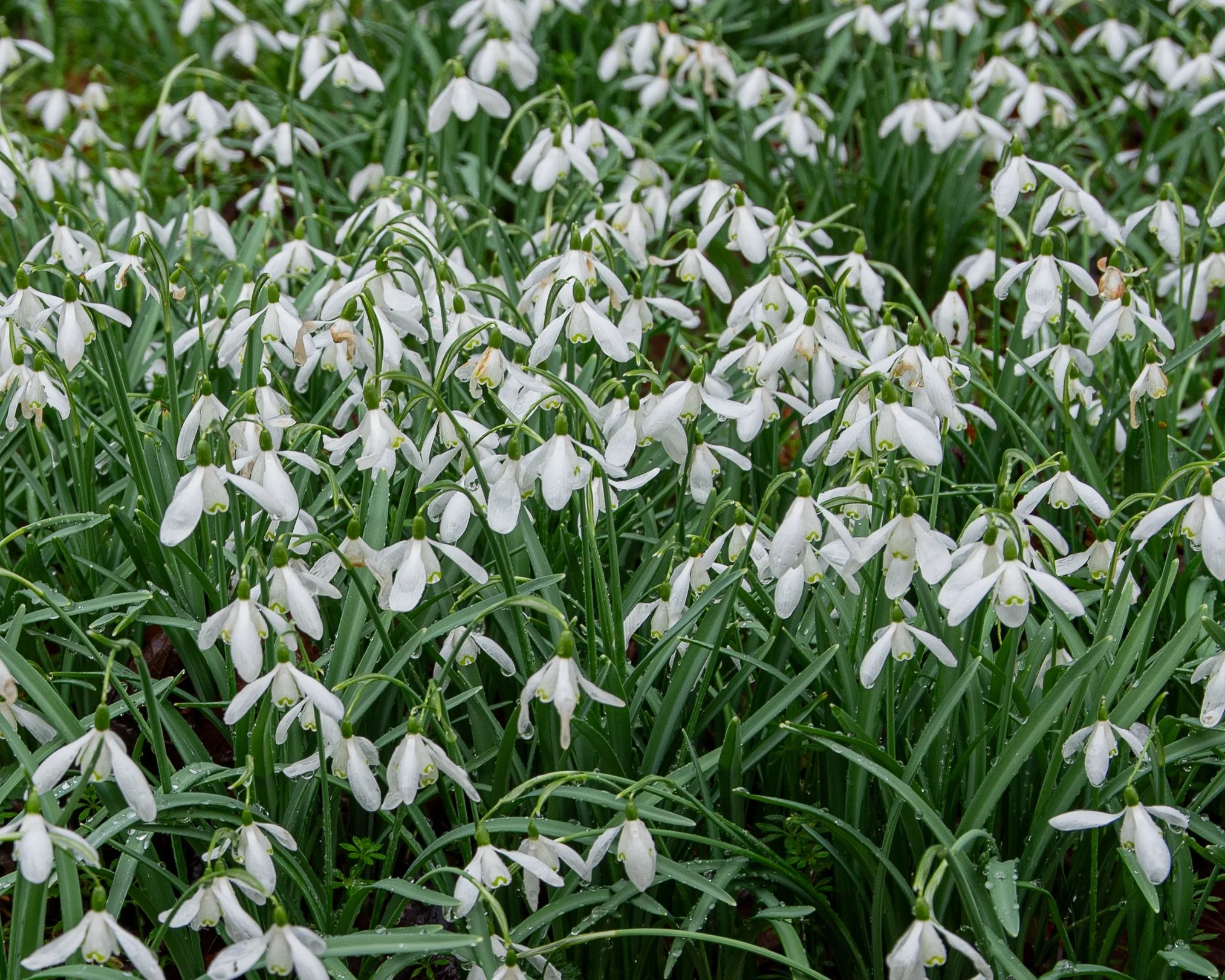
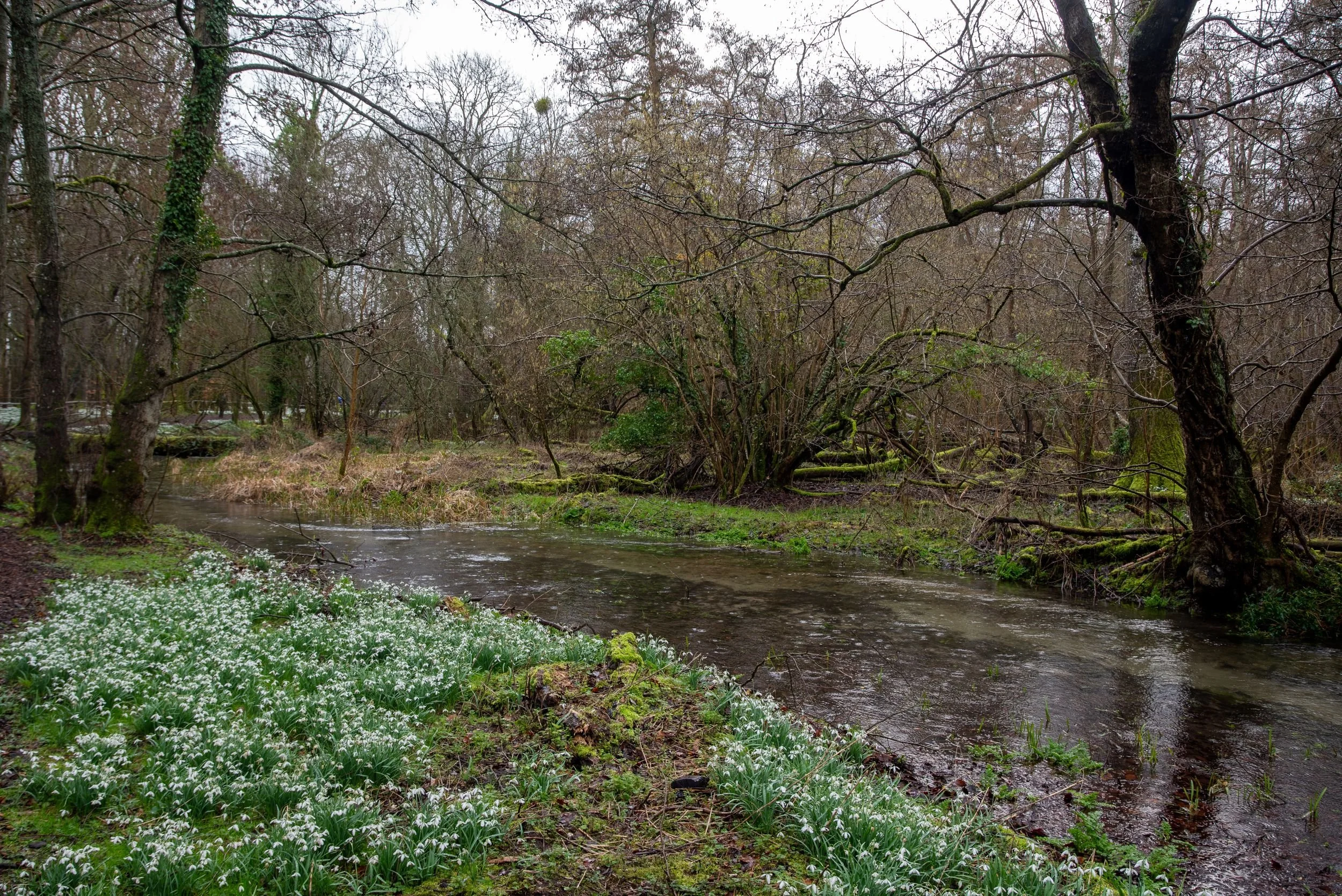
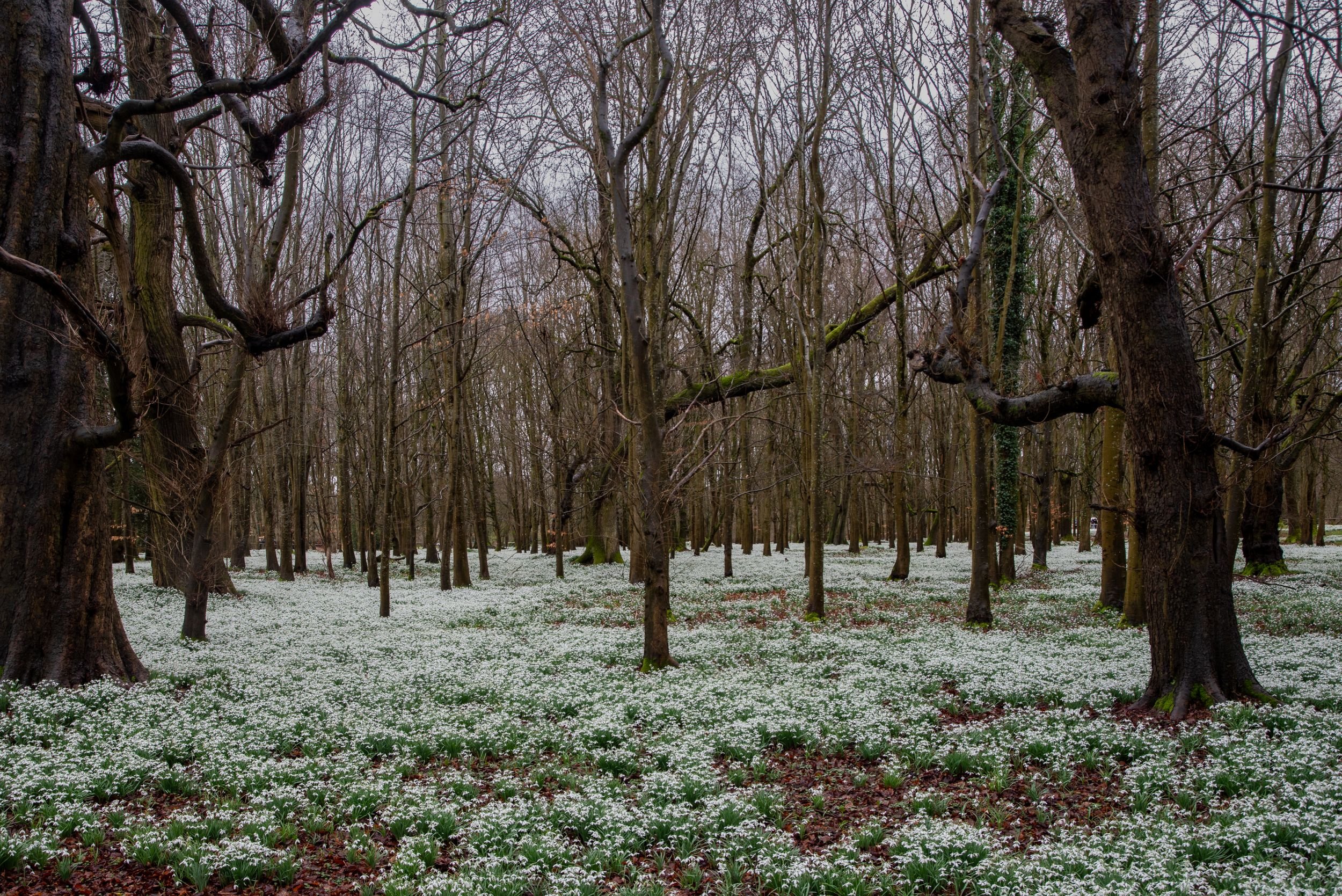
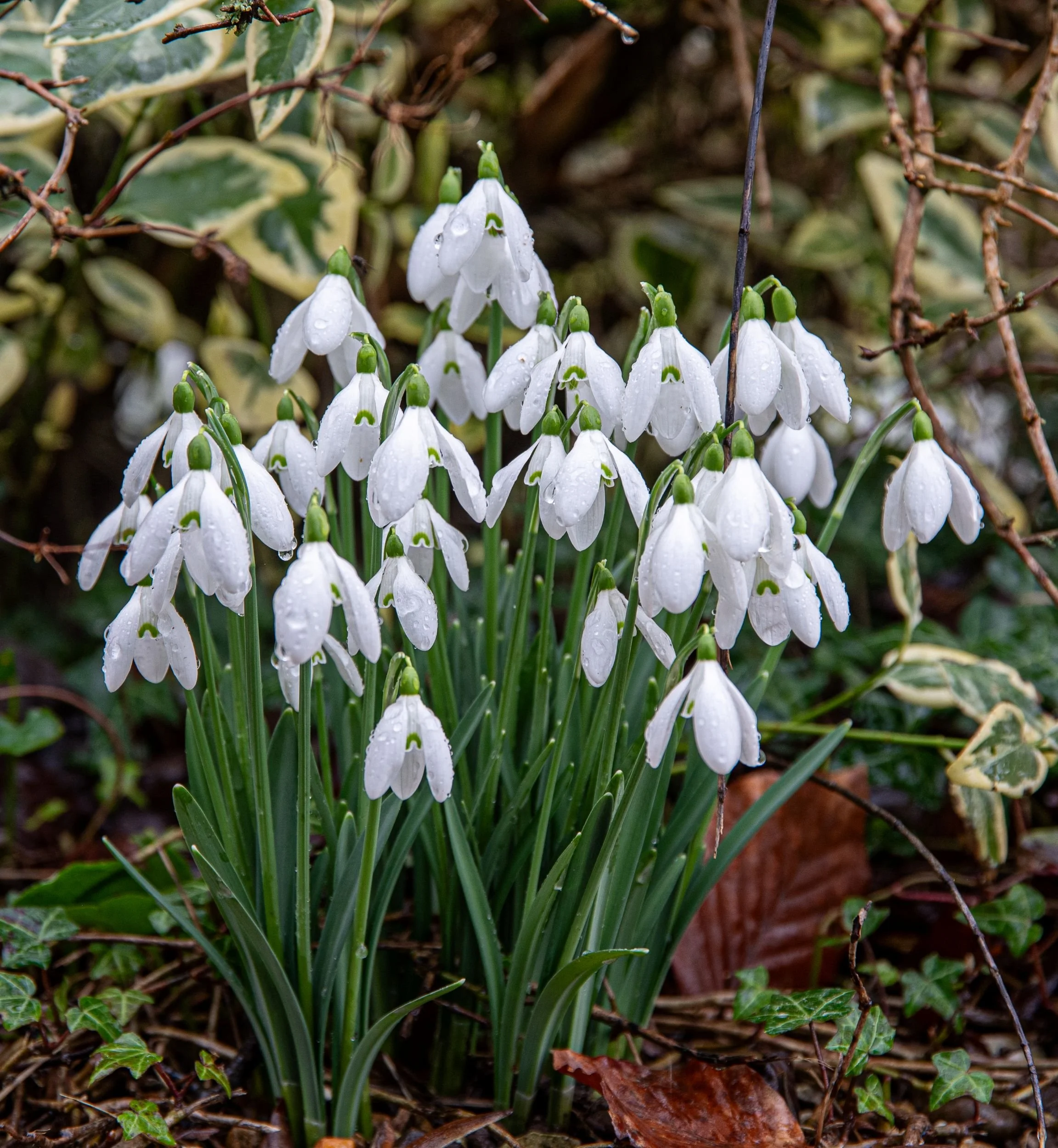
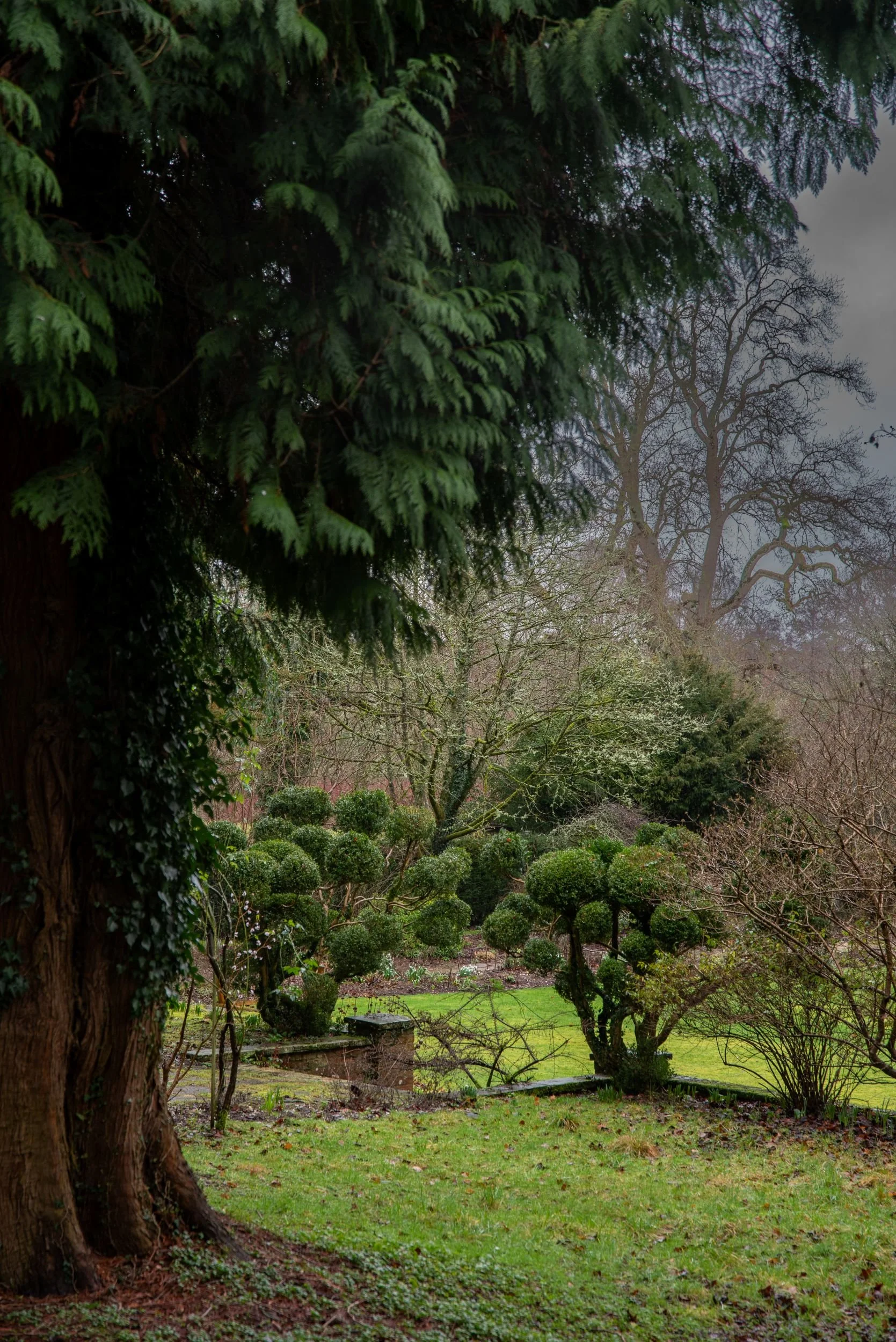
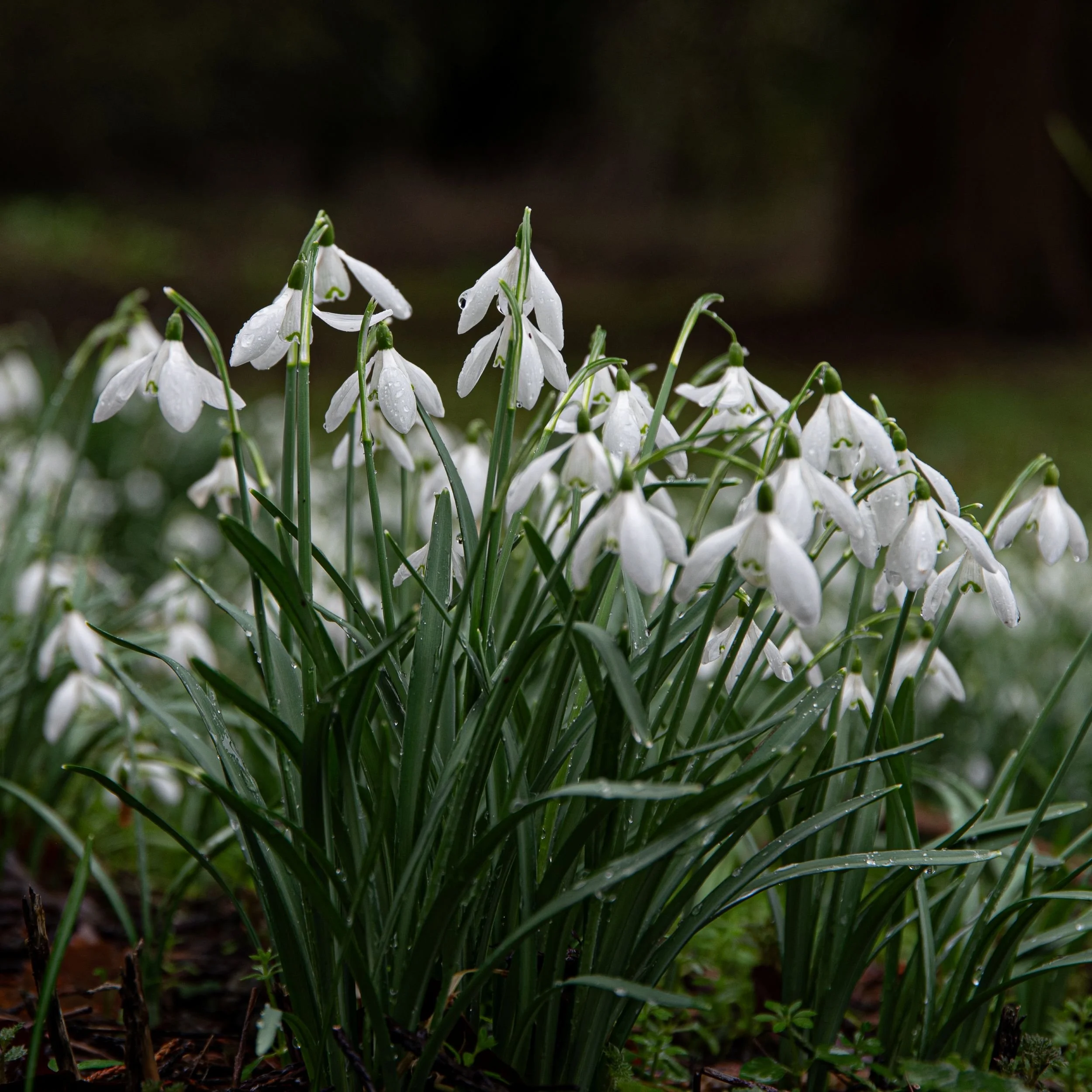
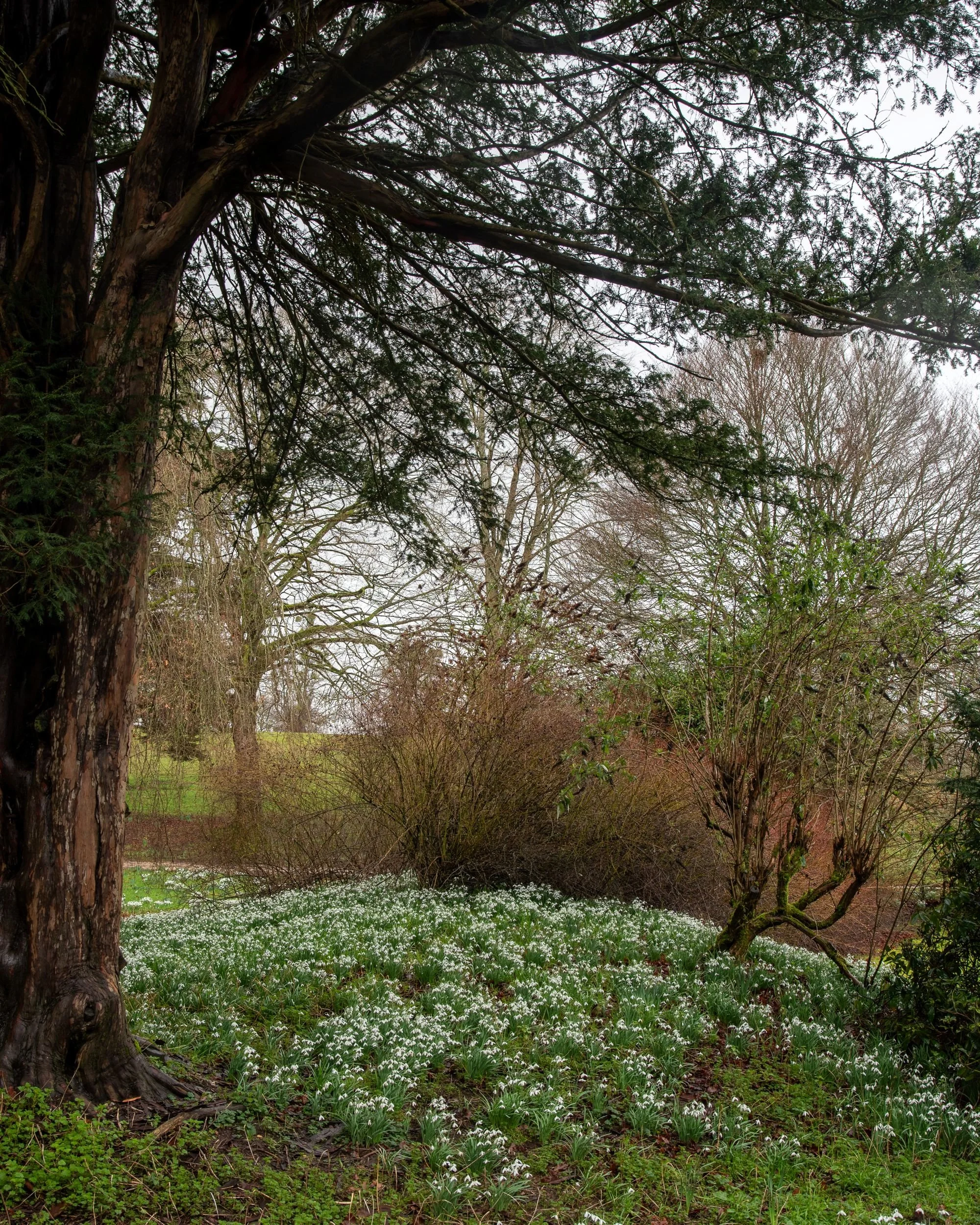
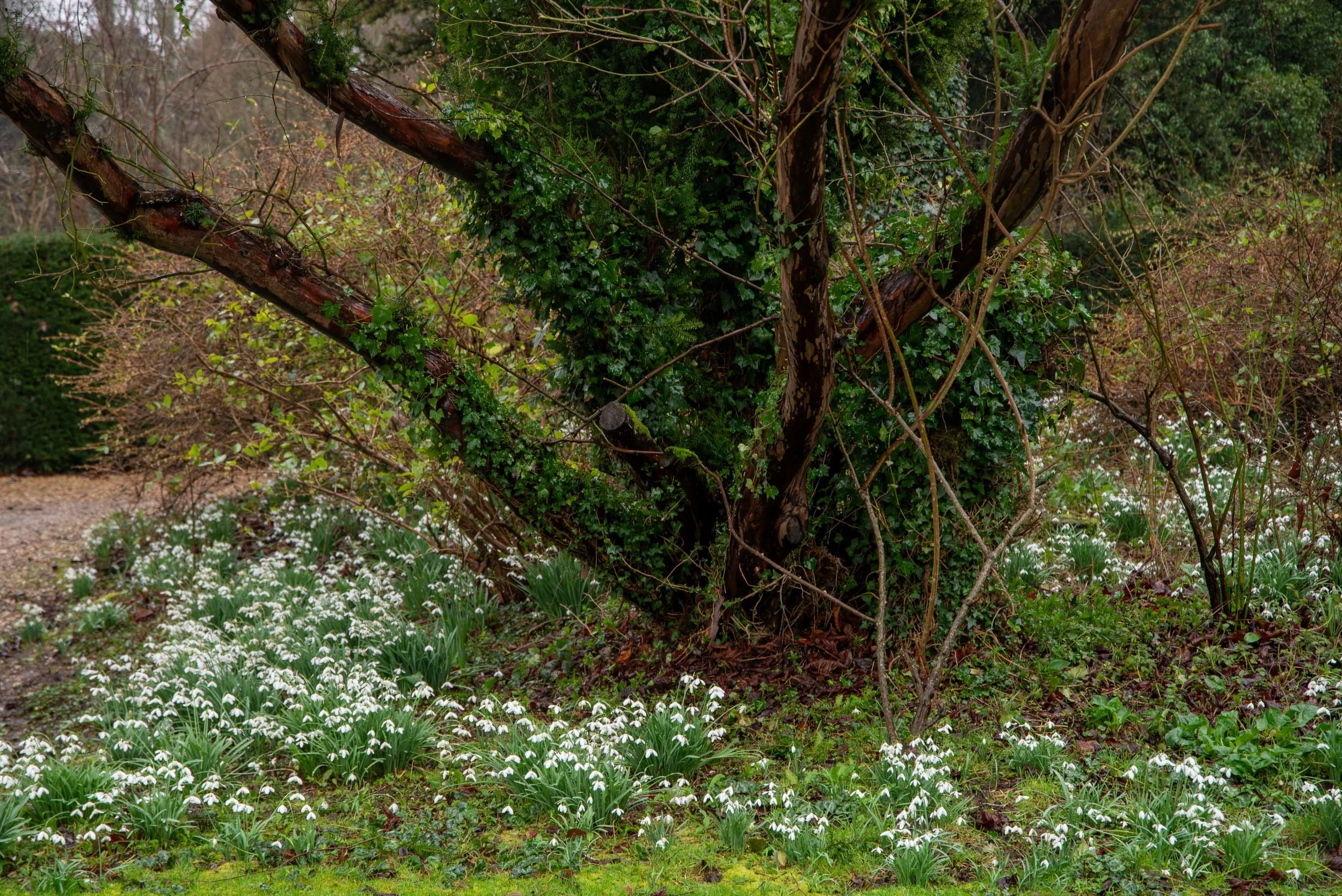
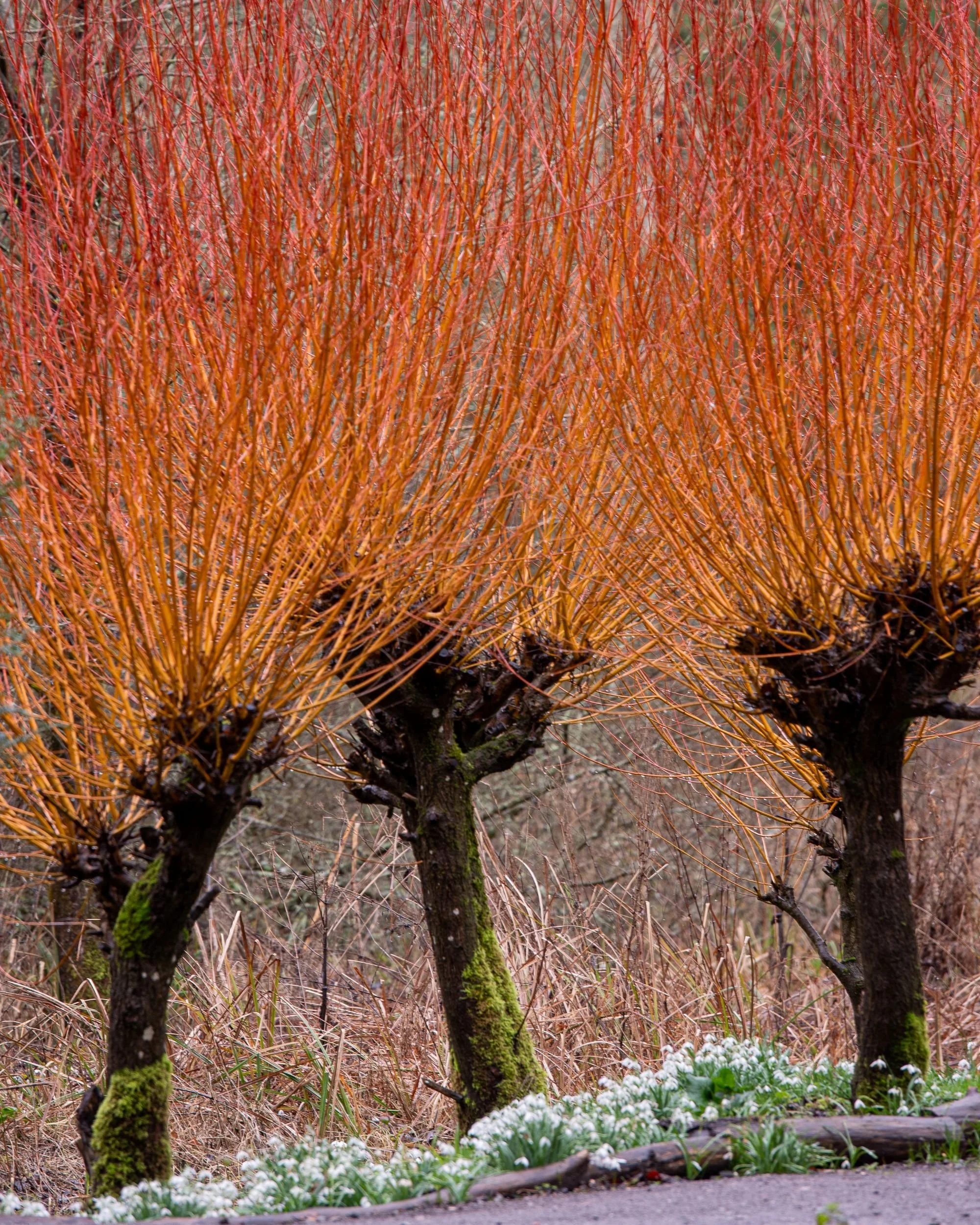
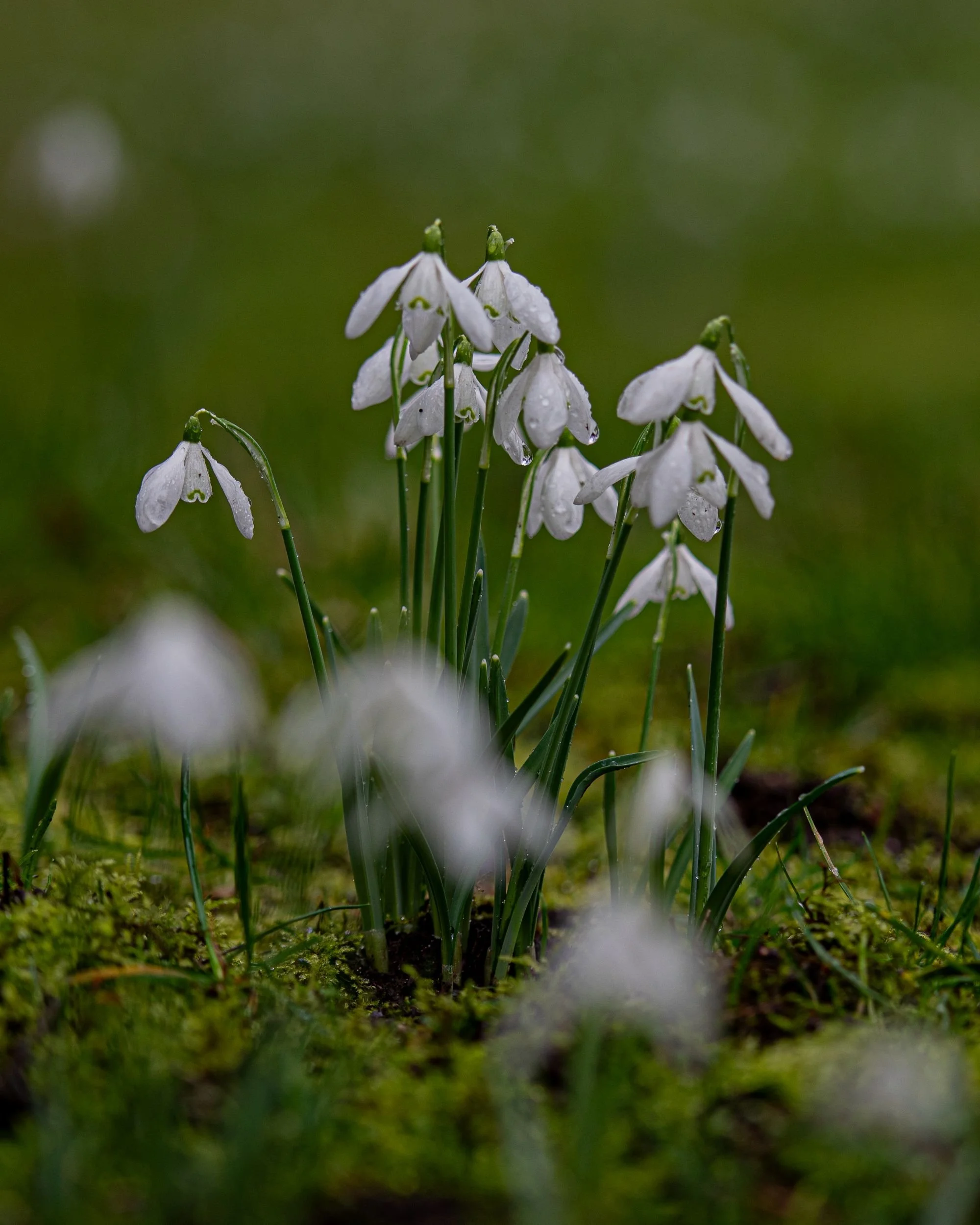
At Welford Park the snowdrops decorate around five acres of beech woodland, as well as many parts of the gardens and grassy banks, under trees and along the River Lambourne. The most common snowdrop here is Galanthus nivalis but there are reputed to be around 73 cultivars on the estate. Snowdrops enjoy damp conditions and will cross-pollinate easily, hence the large number of cultivars. I’ve written more about snowdrop cultivation here.
Best time to visit
Although later February is probably peak snowdrop time, in the south at least, you cannot guarantee cooperative weather. II visited on a very wet day in early February but I’d like to see the massed snowdrops on a sunnier day. I can tell you it’s not easy photographing snowdrops whilst carrying a heavy backpack and an umbrella, trying to keep my camera dry. I had wet, muddy knees by the time we got to the pub.
Not just snowdrops
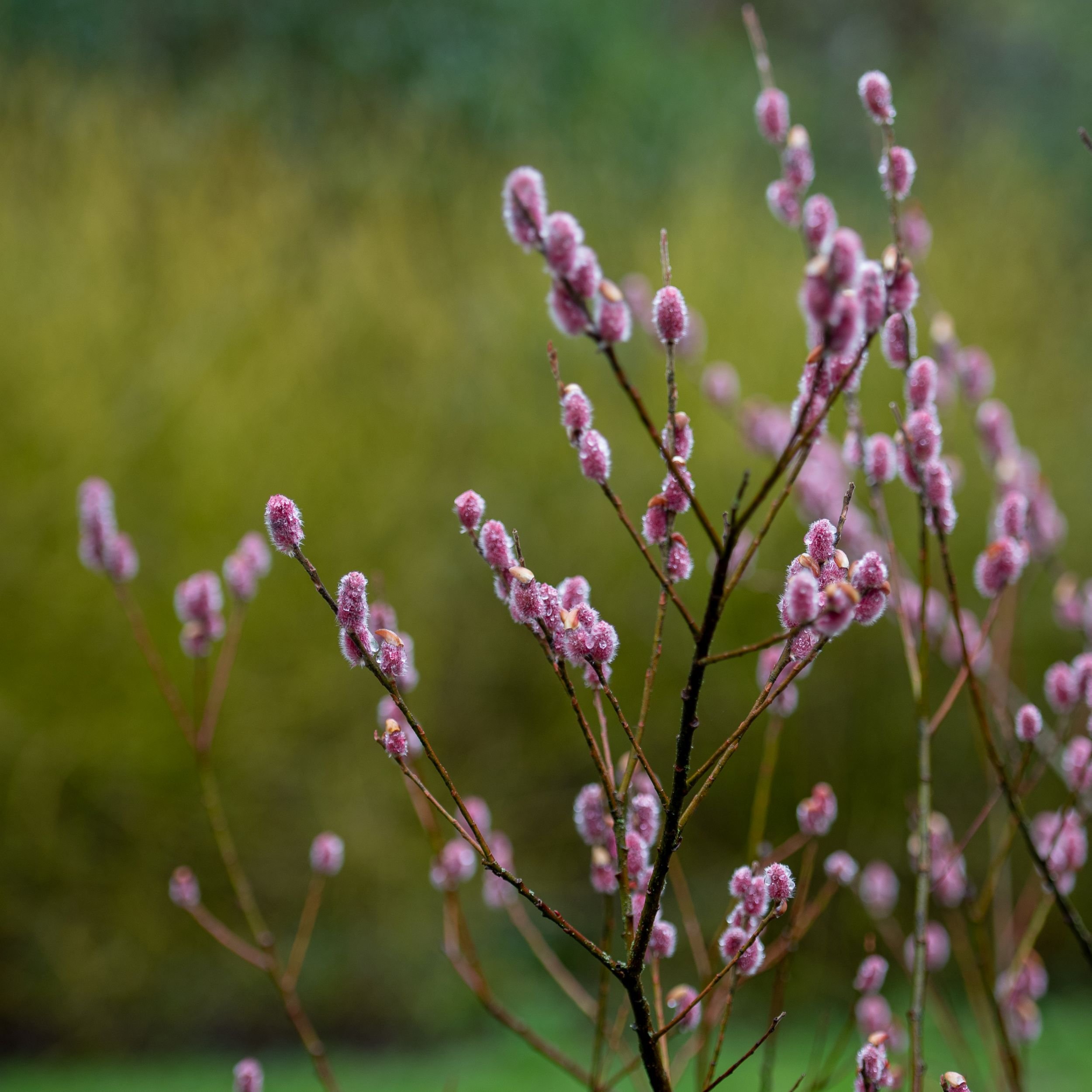
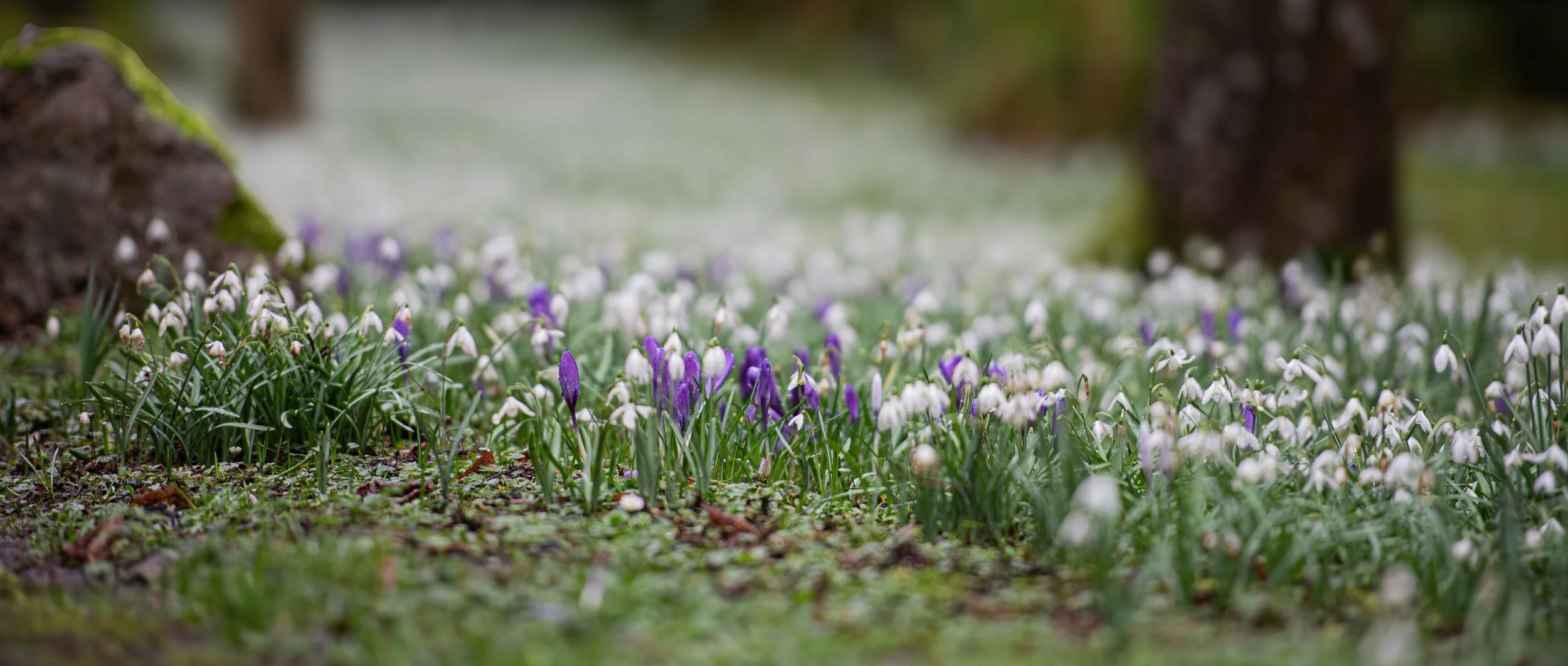
Although snowdrops are the main draw there were other good winter flowers here, lots of hellebores, but crocuses were still a bit shy in the rain. There were some lovely shrubs, scented daphnes, and some colourful willow stems. The catkins of this willow, Salix gracilistyla Mount Aso were pretty stunning.
Best to book ahead
You really need to book a visit to Welford Park, not least to avoid the long queue to get in. Rather cheekily they offer insurance so you can change the date of your visit if it’s raining. I had declined this thinking that not many people would turn up in the wet weather. How wrong I was, there was a queue to get in the car park and booking ahead is a really good bet.
Is there a cafe?
There was a long queue for coffee or lunch was so we didn’t bother. We had a good lunch at The Five Bells about a mile away. If we’d booked that we wouldn’t have had to wait 30 minutes to even order.
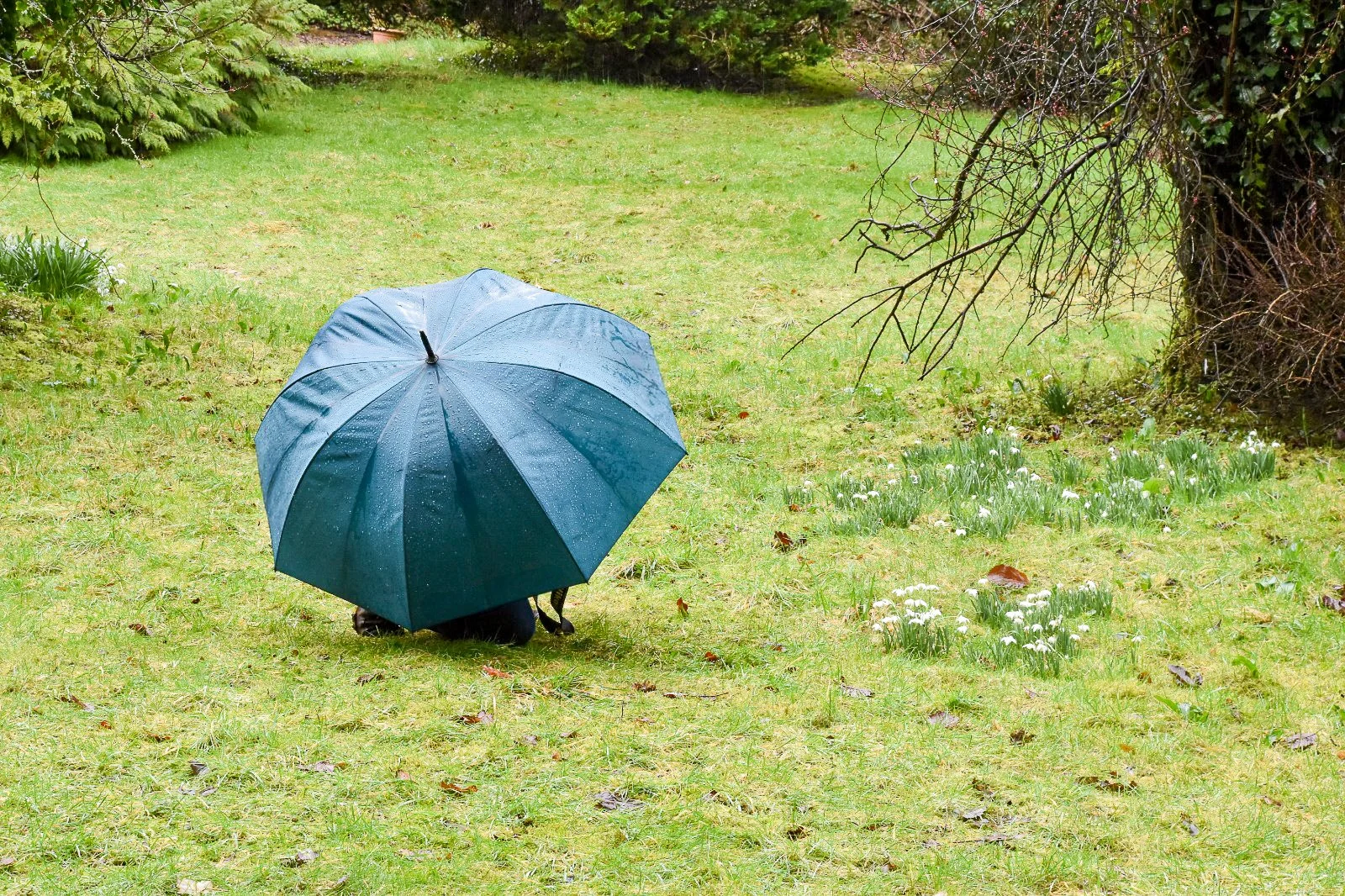
Snowdrop photographer hard at work