
Climate change and the challenge for London gardens
I think we are mostly agreed, climate change is happening and it’s having a big effect on our gardens. Many times I have been asked for a climate resilient garden. Just when you think you’ve got the weather pegged as hotter, drier summers and milder, wetter winters, you get thrown curveballs like the Beast from the East or the summer of 2021 which was almost the usual “cool and cloudy with a lot of rain”. The only thing about certain about climate change is that it is uncertain, and most undoubtedly it will continue to change.
In London the last four summers, 2026 included, have been hotter and drier. The winters have been wetter, drier, cooler and milder. London has an additional complication that the rest of the country doesn't. The urban heat island effect — the way dense city infrastructure absorbs and retains heat — means London regularly runs several degrees warmer than the surrounding countryside. Official UK record temperatures are never publicised for London itself, which always strikes me as absurd, given how much hotter the city runs than the Met Office would have us believe.

Heavy snow is rare in London but January 2021 saw the coldest winter in the last 15 years, with daytime temperatures rarely getting above freezing for eight days in a row.
However, it does mean we can grow things that wouldn't survive a winter further north or in more exposed locations, and some of the more adventurous planting you see in London parks and gardens reflects exactly that. But it also means that during a heatwave, a London garden can experience temperatures that push even the most robust plants to their limits. Hard landscaping — paving and walls, plus building walls and roofs — absorb heat through the day and releases it overnight, preventing the temperature drop that many plants need to recover. A garden that's heavy on hard surfaces and light on planting makes this considerably worse. Which is, unsurprisingly, one of the best arguments for more planting and less paving — not just aesthetically, but as a form of practical temperature management.
"The seasons don't seem the same anymore"
I've lost count of the number times I’ve had this conversation with other gardeners - an early spring that gets ambushed by a late frost, summers that swing between prolonged drought and sudden downpours that the garden can't absorb. Winters are milder but more erratic, so you're never quite sure what's survived and what hasn't until late into spring. The traditional rhythms that gardeners have relied on for generations are shifting, and planning for that has become considerably more complicated.
This isn't anecdote. The Met Office has confirmed that UK hardiness zones are moving northward. Oh how we laughed at the idea of commercial vineyards in England; the rules we've gardened by for decades need updating - the RHS expects some parts of the UK will become completely frost-free.
What's actually changing
The challenges are many and most gardeners are having to deal with more than one.
Drought and water stress are becoming the dominant summer issue, especially in London and the south-east. Hosepipe bans, rising water costs and the sheer physical stress on plants during prolonged heat are all bearing down simultaneously. Lawns that looked reasonable in May can feel beyond rescue by July.
Flooding and soil damage is the counterintuitive flip side. Intense rainfall arriving in short bursts overwhelms soil that can't absorb it quickly enough. This damages soil structure, drowns roots and creates compaction that takes several seasons to repair. Your garden can be parched from July to September and waterlogged from November to February.
Pests and diseases are becoming more prevalent. Milder winters mean fewer pest populations are being killed off naturally. Slugs, vine weevil and various fungal diseases are thriving year-round. And new arrivals from warmer climates — the box tree caterpillar being one of the most painful recent examples — are spreading themselves across the country with alarming efficiency.
The joys of London clay
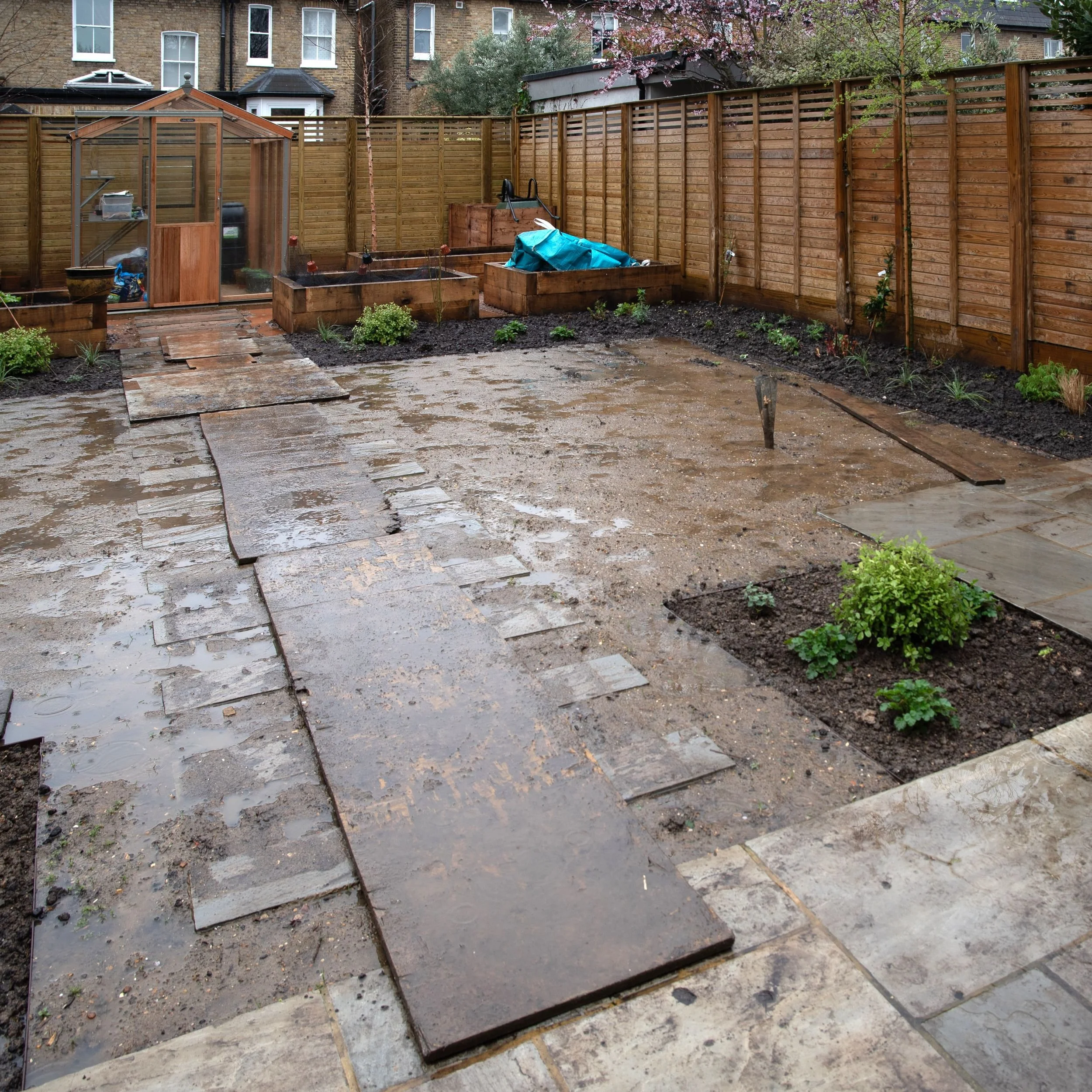
Trying hard not to make things worse during a very wet garden build in London in winter
Even in normal years you have to pick your moments with clay. It’s like glue in winter and concrete in summer. For those of us gardening in London, as well as parts of Kent, Sussex, Cambridgeshire, Suffolk and the Midlands, climate change is affecting soil that was already difficult. London clay is heavy, slow-draining and unforgiving at the best of times — in a wet winter it becomes waterlogged and compacted, in a dry summer it shrinks and cracks, sometimes dramatically enough to affect foundations. It is the worst possible soil for the kind of weather extremes we're increasingly dealing with.
The irony is that clay, properly managed, is actually a fertile soil with good moisture retention — precisely what plants need during a drought. The challenge is the "properly managed" part. Clay needs organic matter added consistently over several years to improve its structure, it needs to be worked only when conditions are right (not when wet, not when bone dry), and it needs plants that are chosen with its particular characteristics in mind.
Poorly draining clay also means that many of the Mediterranean drought-tolerant plants people reach for as a climate solution — lavender, rosemary, cistus — can sulk or die in a wet London winter, not from cold but from waterlogged roots. The plant selection conversation for a London garden is therefore more nuanced than it might appear, which is one of the better arguments for getting the design right before reaching for a trolley at the garden centre.
What really helps
The good news is that most of the solutions are things a well-designed garden does anyway.
Choose plants that can handle the range. The old idea of a plant being either drought-tolerant or good in wet conditions is giving way to a more realistic search for plants that can cope with both. Mediterranean plants — Salvias, Echinops, Sisyrinchiums, many of the ornamental grasses — have proven remarkably adaptable in London gardens. The principle that Beth Chatto and Nicola Ferguson built their careers on — right plant, right place — matters more than ever, it just needs updating for conditions that are shifting rather than stable.
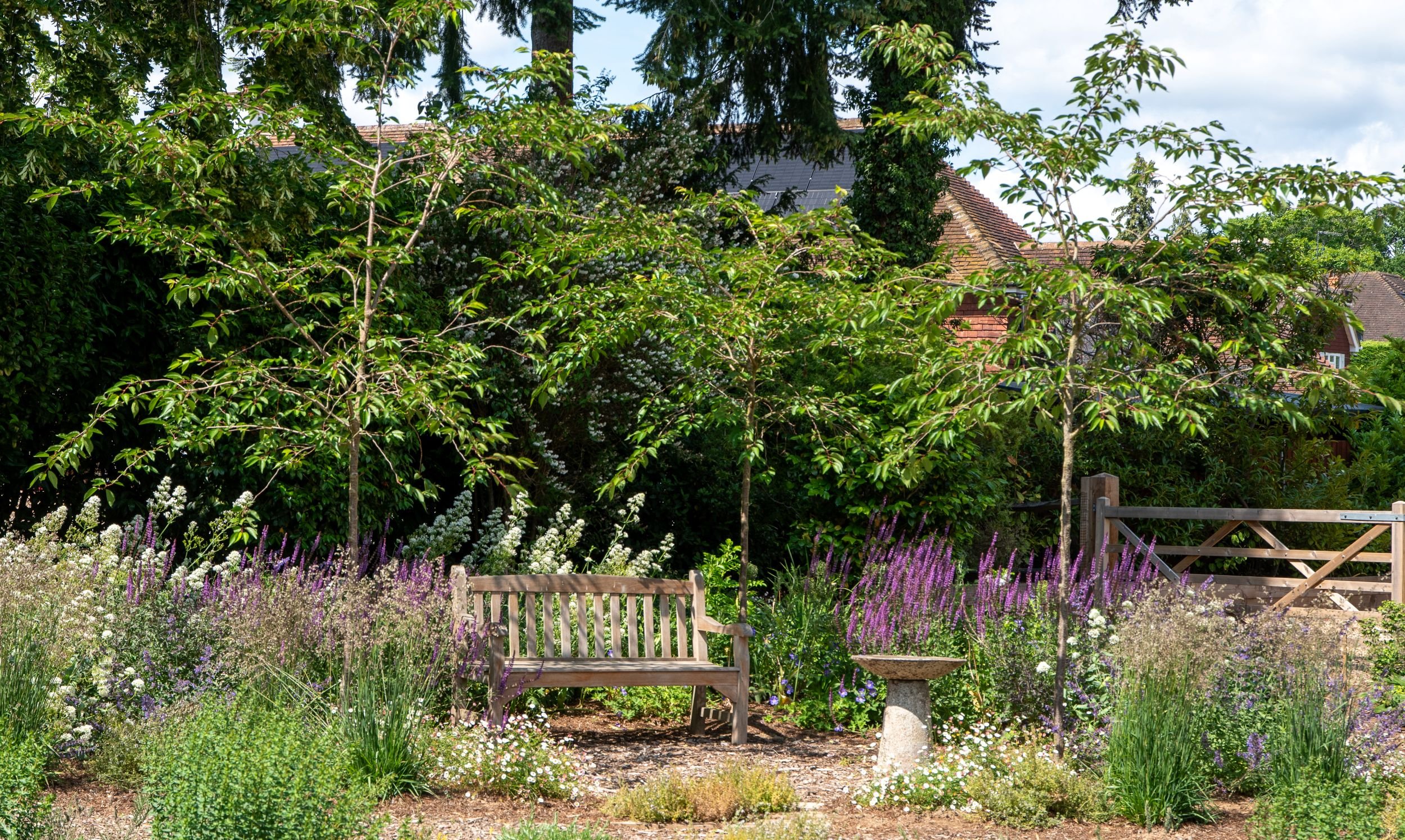
Planting trees in a new garden to deliberately create shade - relief from the sun for plants and people alike
Invest in soil. A healthy soil rich in organic matter is the single best insurance against both drought and flooding. It retains moisture when dry and drains more efficiently when wet. Regular mulching, avoiding compaction and reducing digging, all build the kind of soil structure that copes better with extremes. For London clay gardeners this isn't optional advice — it's the foundation everything else depends on. It's unglamorous, but it works.
I’m not sure how the current trend for planting in deep gravel and other aggregates would work on London clay. It would require the importation of huge amounts of material, not in itself that sustainable anyway, and is likely to create a sump effect where the winter water sits in a layer above the soil. It is better to work with what you have and, after all, its fairly easy to create your own compost to use as an organic mulch.
Think seriously about water. Water butts are a start, but most gardeners need to go further — linked storage, larger tanks, or planting schemes that direct water toward borders rather than letting it run off hard landscaping. A well-designed garden should be catching and using rainfall, reducing the reliance on mains water.
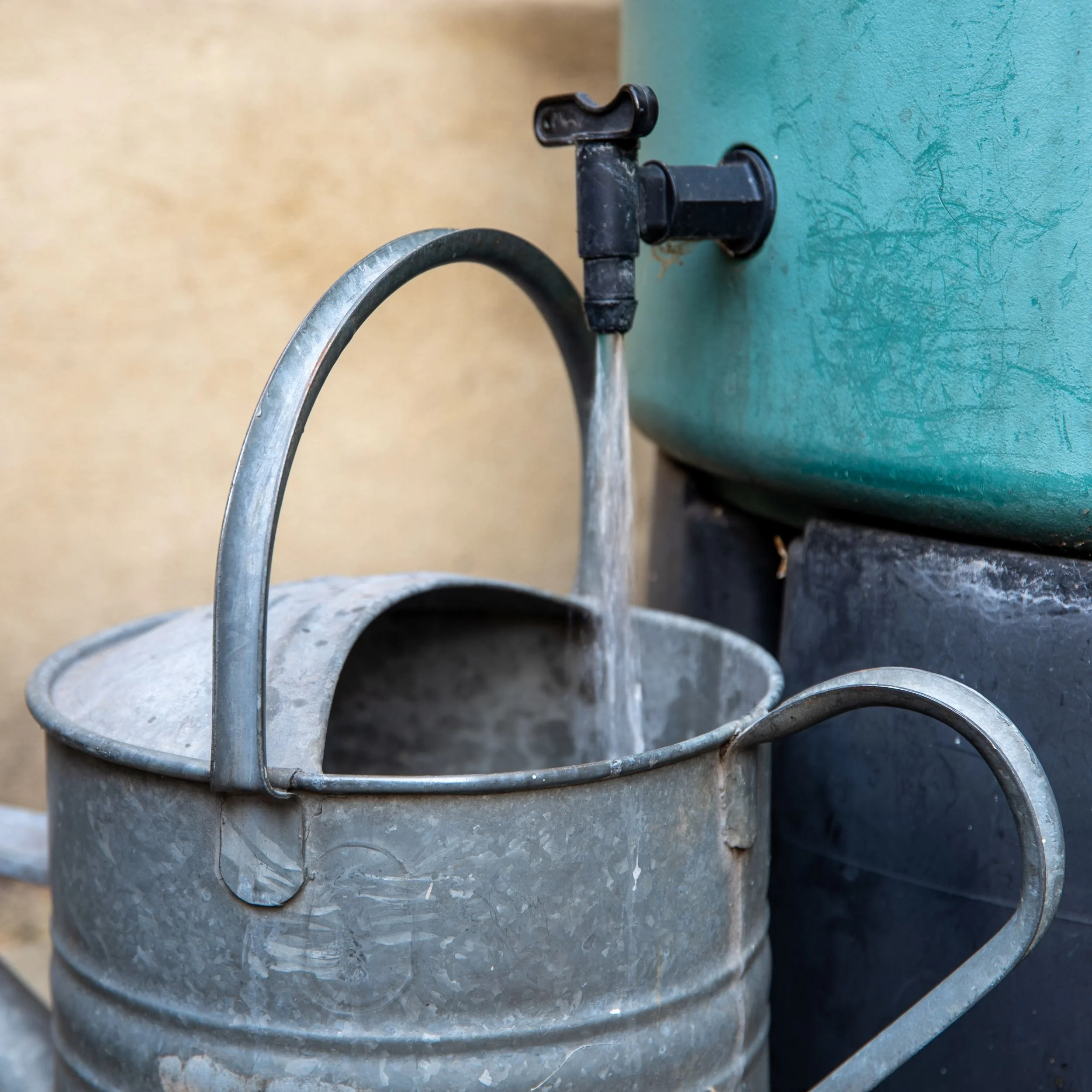
Water-butts are useful but rarely large enough to last a whole summer
The use of irrigation systems remains contentious. On the plus side they are usually exempt from hosepipe bans, can be relatively cheap, if fiddly, to install, and deliver a consistent level of moisture to plants so that they are never stressed. But how realistic is it to garden like this? As gardeners we will never adapt if we continue to pretend nothing has changed. I also think people lose touch with their gardens when they assume technology is doing all the work. And this can all go wrong when pipes get clogged or broken - we all know London foxes love a chewy pipe… However, in some situations I do encourage some clients to install irrigation for the first couple of years for a new garden to help it get established.
Reconsider the lawn. The traditional lawn is increasingly high maintenance in a changing climate — scorched in summer and waterlogged in winter. Most lawns recover with sufficient rain in the autumn but who wants to look at brown, crunchy grass all summer? Replacing some of it with drought-tolerant ground cover or a simple meadow area reduces water demand and often creates a better garden in the process. Don’t think of it as giving up a lawn but as an opportunity to plant a lot more interesting plants in your garden. Some of the best small London gardens I've seen have no lawn at all.
Use trees and shrubs to create microclimates. A well-placed tree does an enormous amount of quiet work — moderating temperature, reducing moisture loss from the soil, sheltering more vulnerable plants. Thoughtful structural planting is probably the most effective long-term investment a garden can make against climate uncertainty. My own garden is quite shaded from trees and aside from being slightly cooler on roasting days many plants are benefitting from not being in full sun all day.
Adapting the mindset
Perhaps the most important adjustment isn't practical at all. It's letting go of the idea that a 21st century garden should look the same as a garden 20 years ago. Gardeners should adopt a more experimental, responsive approach. The gardeners I’ve a lot of time for like, James Hitchmough, Nigel Dunnett, Charlie Harpur at Knepp and Jo McKerr, are the ones treating climate change as an opportunity — to grow things they couldn't before, to try plants they'd always considered too tender, to redesign spaces around the conditions they actually have rather than the ones they remember.
That's not giving up or pretending climate change isn’t happening, it's accepting the challenge and adapting.
None of this is to say it’s going to be easy. The challenges are real and they're ongoing. Even the climate we have now, which is very different to 20 years ago, is unlikely to be the climate we will have in another 20 years. But a garden that's been properly designed, with the right plants in the right places and a structure that works with the conditions rather than against them, is considerably better placed to weather whatever comes next.
Which is, in the end, what a well-designed garden has always been for.
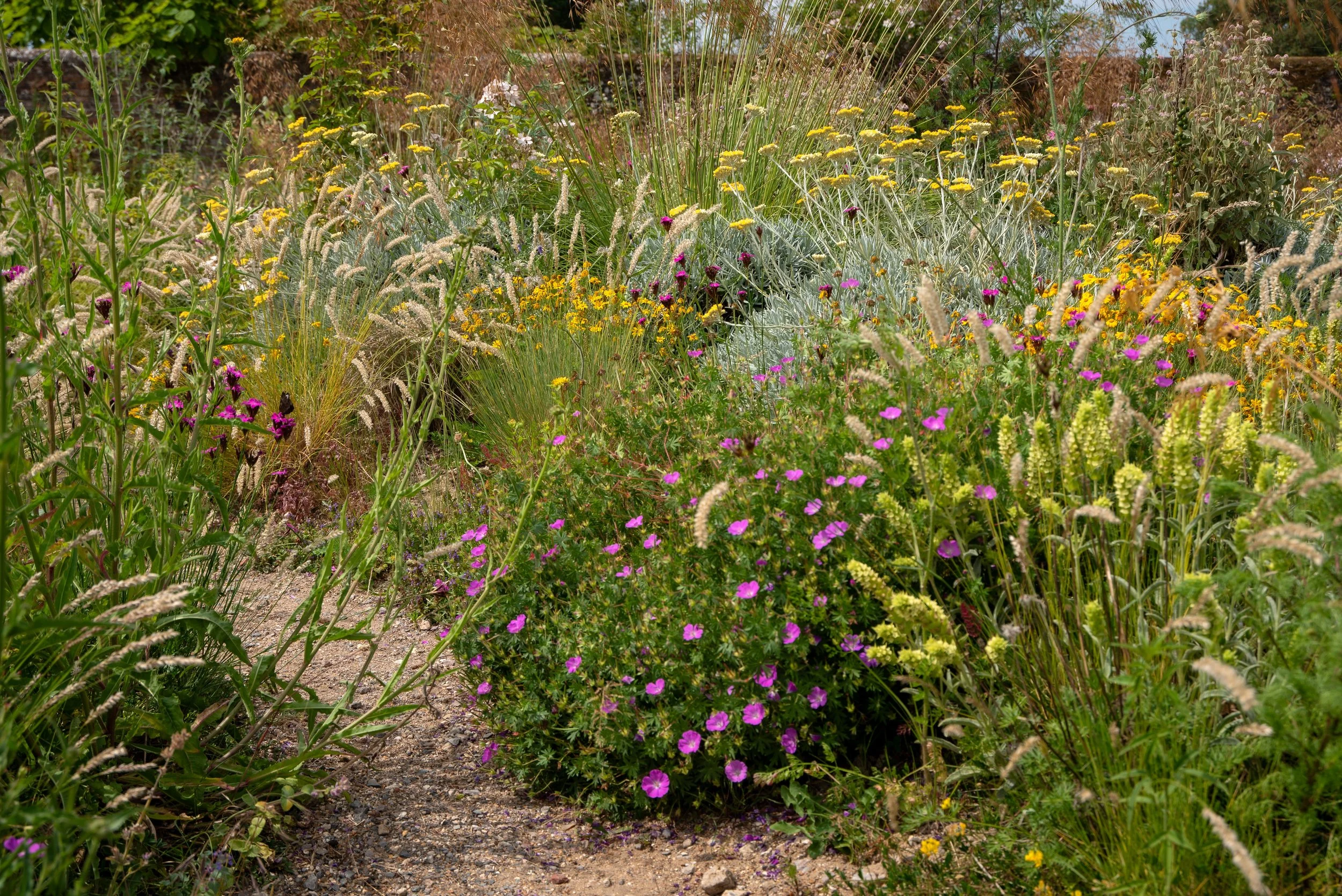
The walled garden at Knepp, planted to increase biodiversity and reduce water and maintenance requirements
Frequently asked questions
Is climate change really affecting London gardens?
Yes, and noticeably so. Longer dry spells, more intense rainfall, milder winters and shifting frost dates are all having a direct impact on what grows, when it grows and how much maintenance a garden requires. London gardeners are on the front line of these changes, partly because of the urban heat island effect which amplifies temperature extremes in the city.
What are the best plants for a climate-resilient London garden?
Plants that can tolerate both summer drought and winter wet are the ones to prioritise. Ornamental grasses, many Salvia, Roses, Nepeta, Hylotelephium, and native species like ox-eye daisy tend to perform well on London clay across a range of conditions. The key is avoiding plants that need either consistently dry or consistently moist conditions — the London climate is increasingly delivering both in the same year. In my own garden the plants that never need watering include Gillenia trifoliata, Nepeta x racemosa Walker’s Low, Salivia x jamensis Nachtvlinder, Sisyrinchium striatum, all the roses, Centranthus ruber, Erigeron karvinskianus and most asters. Shrubs that hold up well with hot dry summers and mild wet winters include yew, bay laurel and Spiraea x arguta Bridal Wreath. I find plants are more successful if planted in the autumn rather than spring. And I rarely, if ever, plant in summer.
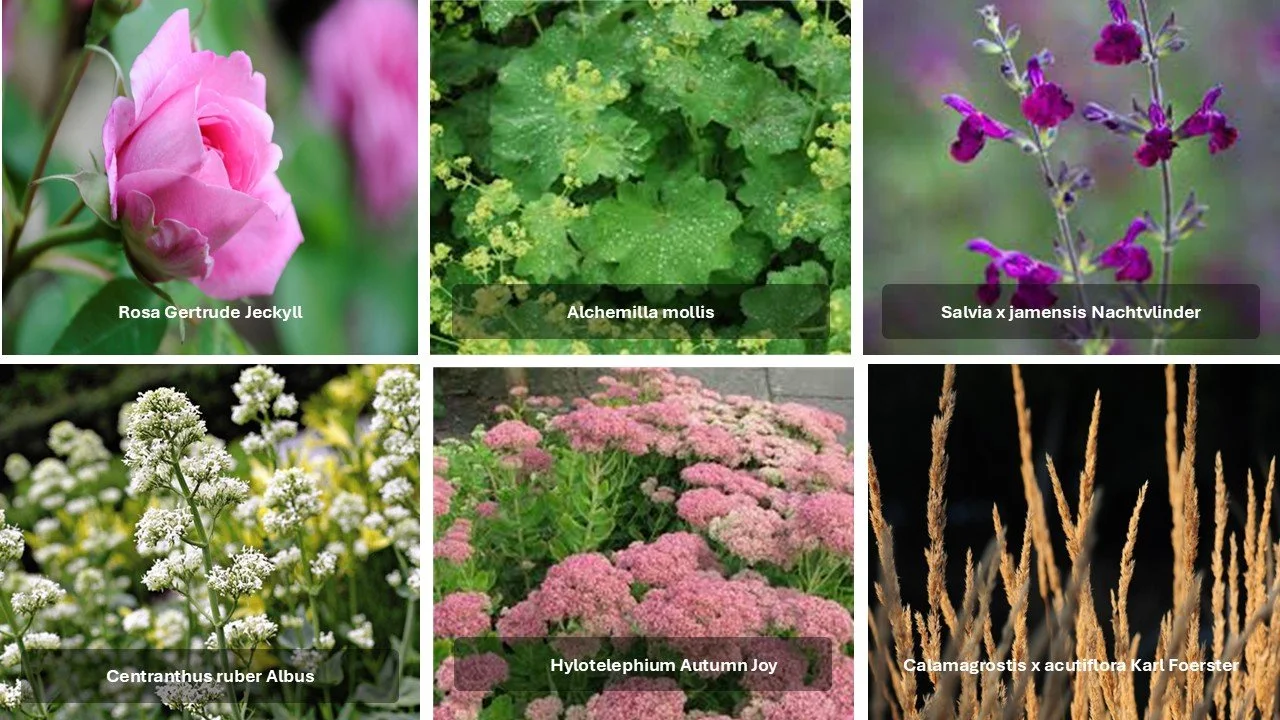
No water required…
How do I improve clay soil in my London garden?
Over time. Add organic matter — garden compost, well-rotted manure, leaf mould — every year, ideally as a surface mulch rather than dug in. Avoid working clay when it's very wet or very dry. Over several seasons the structure improves significantly. Raised beds are also worth considering for vegetable growing or plants that really need good drainage.
Do I need to redesign my whole garden to make it more climate resilient?
Not necessarily. Incremental changes — improving soil health, replacing a struggling lawn, reconsidering a few planting choices — can make a significant difference without a full redesign. That said, if your garden has persistent structural problems like poor drainage or a layout that doesn't work with its conditions, a proper design review is likely to save you considerable time, money and frustration in the long run. I used to bemoan the fact that my south-facing garden was surprisingly shady. Now I find the plants that spend at least part of the day in shade so better than those in full sun - they certainly need less water. Planting to create shade is now a thing.
Does a smaller garden cope better with climate change?
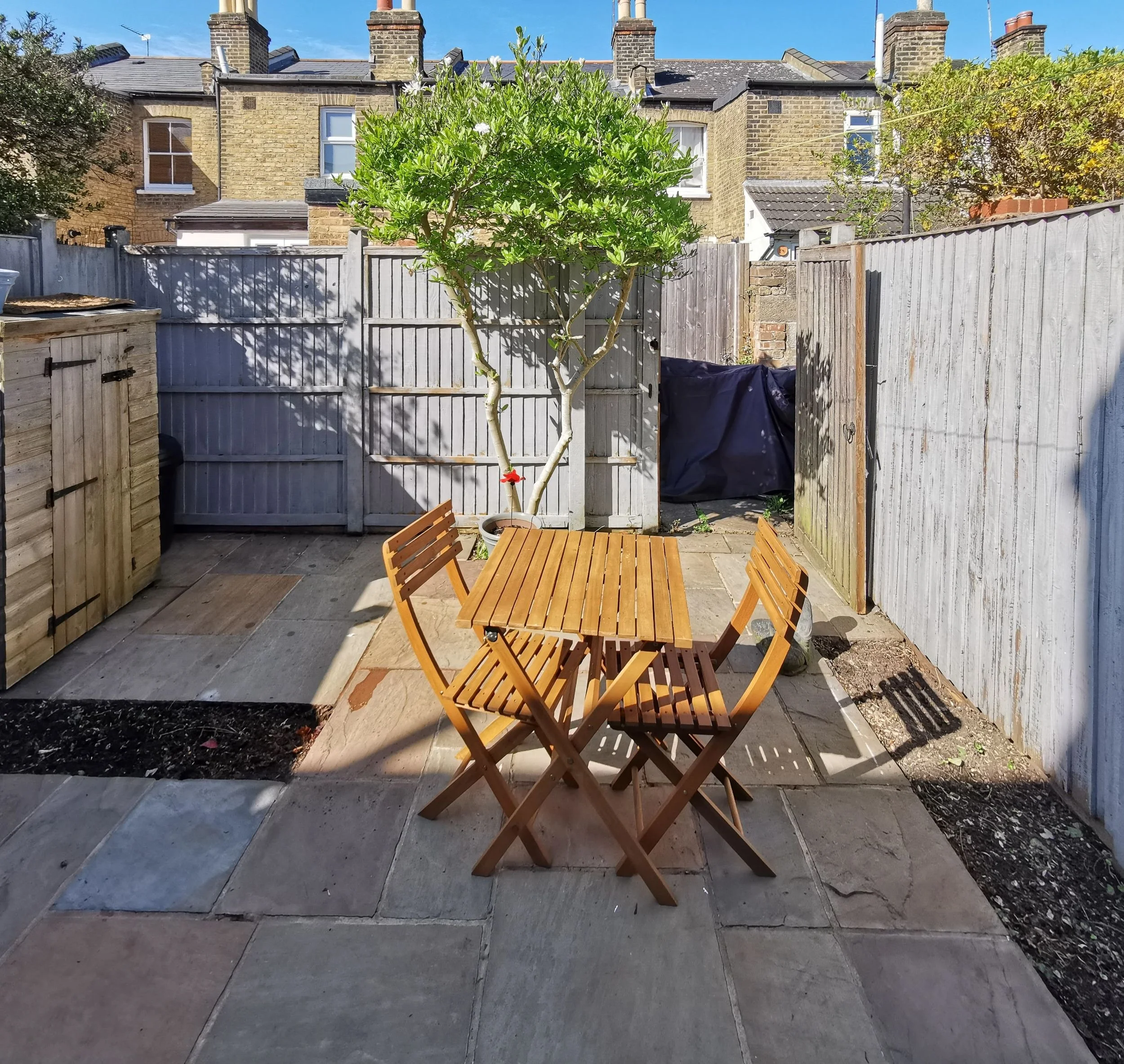
Nice Magnolia
Not automatically, but a smaller garden is often easier to manage well — and good management is the key variable. A small, well-designed courtyard with the right plants and decent soil can be extremely resilient. A small garden in full sun is likely to be hotter than a larger one so definitely consider creating some shade. Any garden with poor structure and the wrong plants will struggle regardless of size.
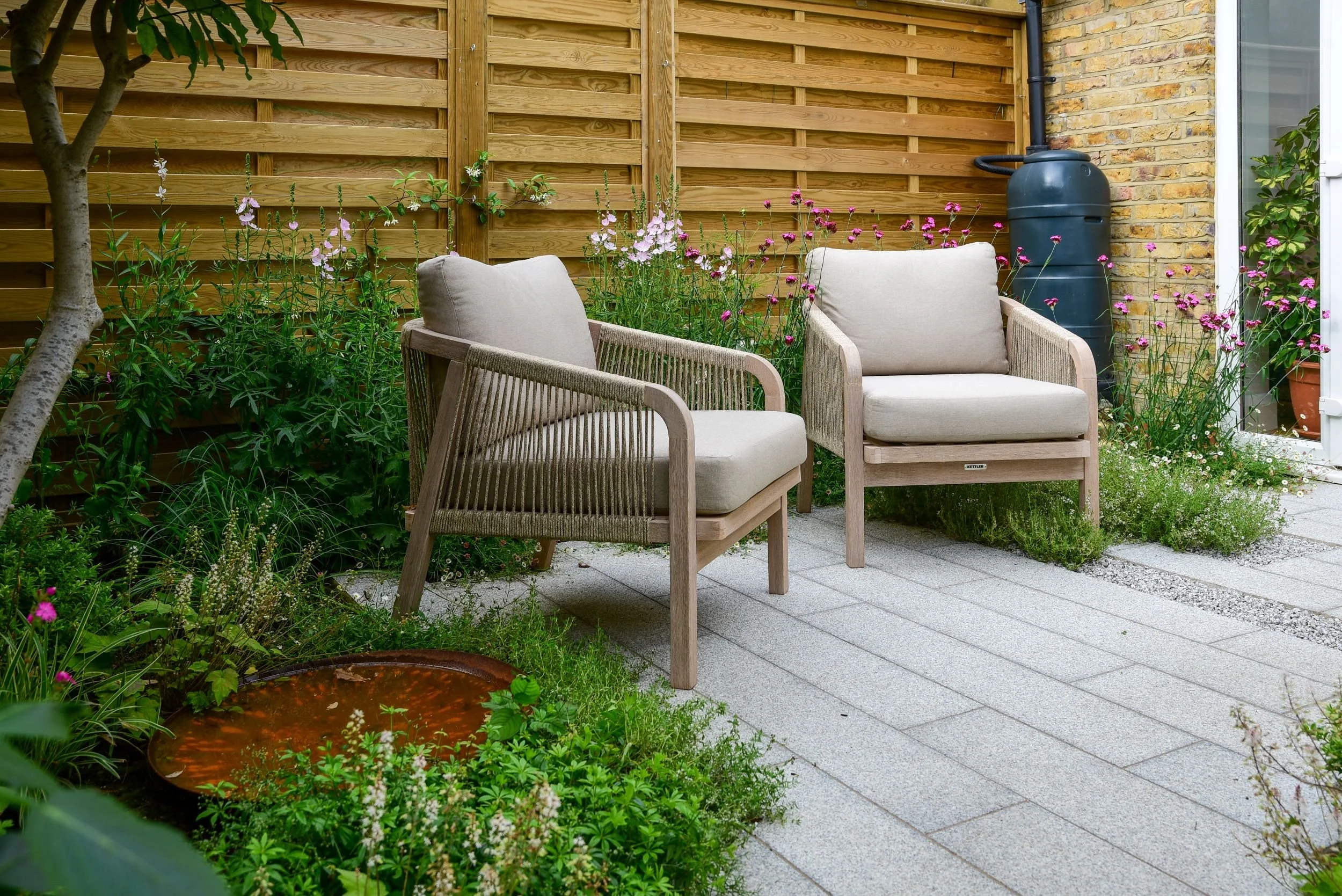
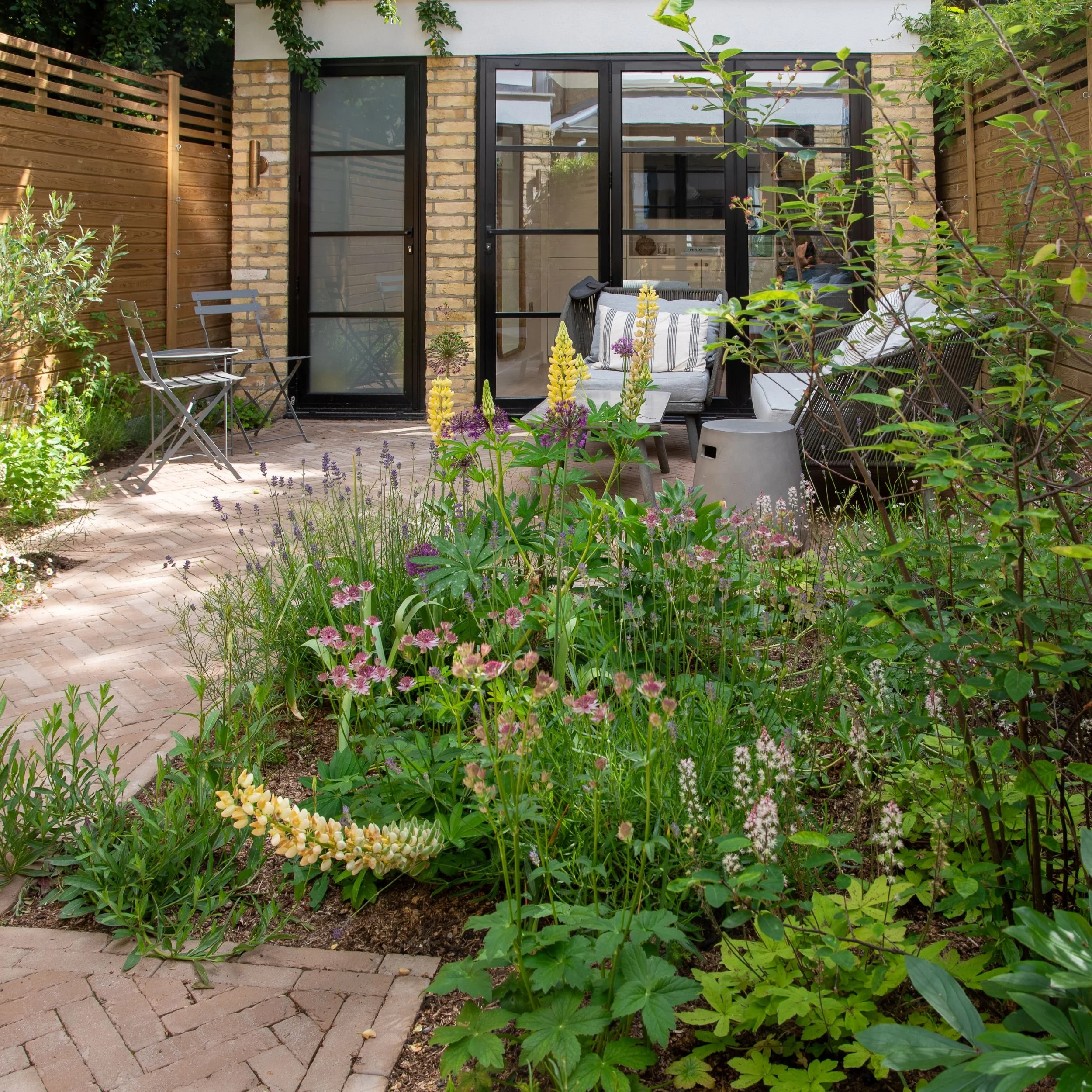
The Magnolia is still there, plus a lot more planting, and a water-butt. The soil has been mulched and heavy rain will fall away from the paving to the borders. It even looks cooler.
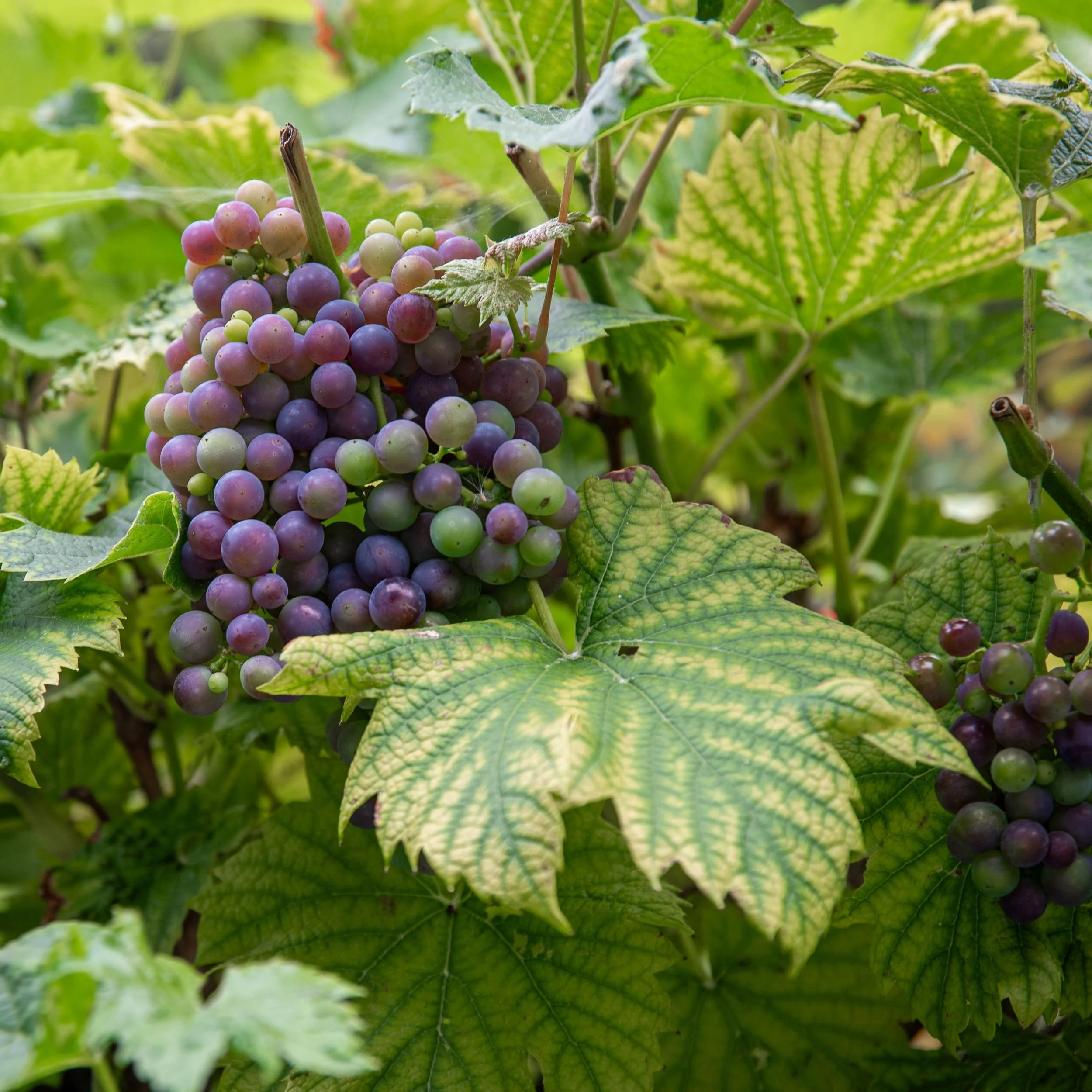
It doesn’t have to be all doom and gloom, this client is growing grapes, figs, apricots and Asian pears