
What does sustainability actually mean in garden design?
Before I start, I don’t want to go all “hair shirt” on you. This is an article about practical ways to make your garden more sustainable and also about what “sustainability” in garden design really means.
"Sustainable" is one of those words so over-used that it has probably lost any real meaning for many people. It appears on compost bags, paving slabs and artificial lawns (yes, really). So when a client asks for a sustainable garden, I always ask what they have in mind. For some it's about encouraging wildlife. For others it's growing vegetables. And some genuinely want to reduce their carbon footprint.
All of those count. But after years of designing gardens, my definition is fairly simple. A sustainable garden contributes positively to the wider environment, copes with the weather, whatever weather that is, and is a place its owners will still want to look after in ten years' time.
There are many easy wins in a sustainable garden design but others require real commitment in terms of time and money and sometimes compromises in the design itself. But, as with any limiting factor in a design process, it can also be the mother of invention.
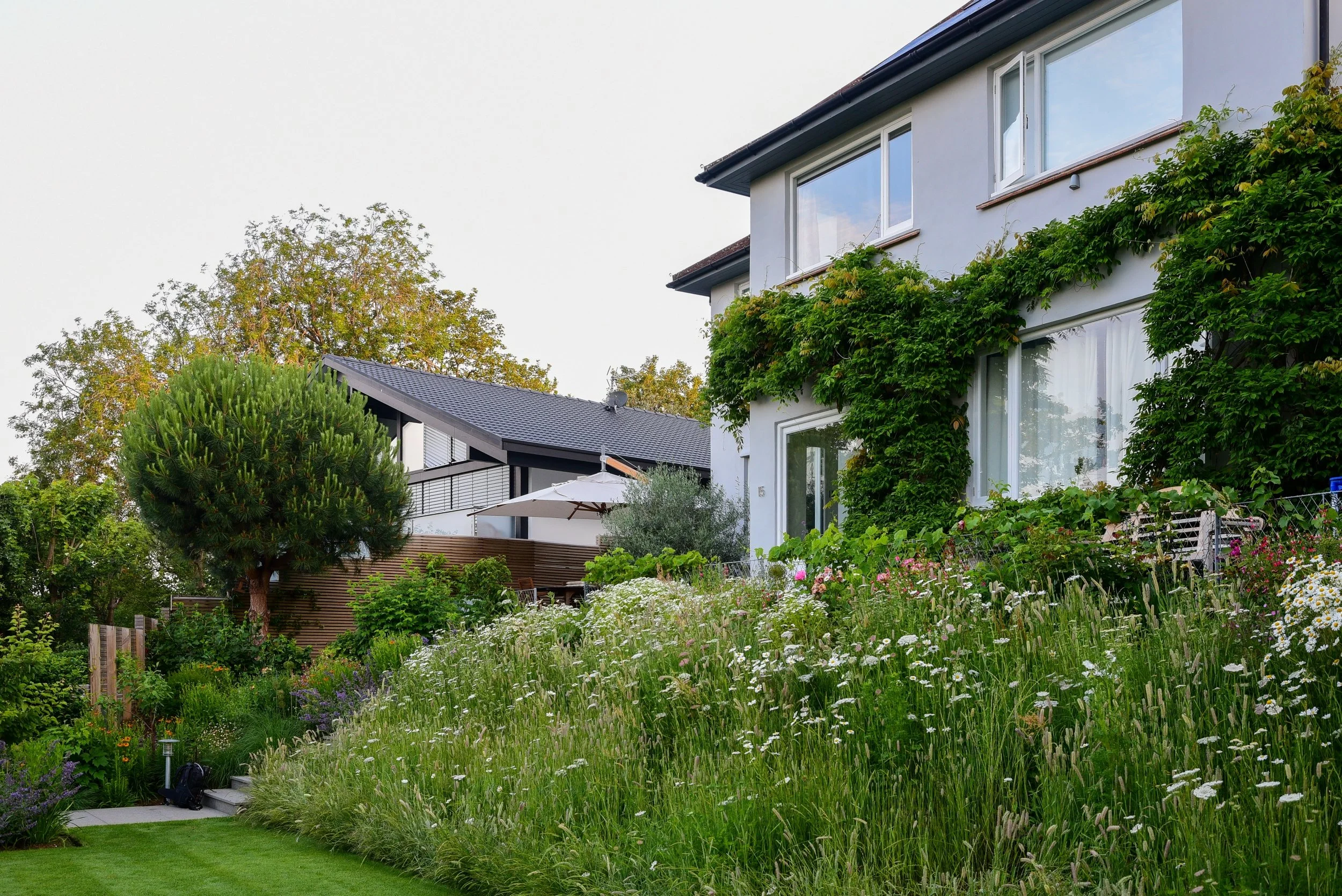
A steep bank was created by making a large level lawn in this sloping garden in Raynes Park. Using a wildflower seed mix from a British grower on the bank meant we didn’t need to build a concrete and steel retaining wall. The wildflower mix changes every year and provides slope stability and nectar for pollinators. It doesn’t need watering and is only cut once a year. A sustainable solution to a design problem.
Closing the loop: thinking in circles
Lets face it, most garden designs arrive in a lorry as palette loads of paving, concrete, topsoil and new plants. And before this a few skips of old paving, concrete and plants would have been taken away. A sustainable garden design doesn’t produce waste, or only as little waste as absolutely necessary. And it requires far fewer inputs than we might have been used to.
Sustainable garden designs start with what’s already on site. Before anything is ripped out I look at what can stay, be moved or re-used: mature shrubs can be reshaped or moved, sound brickwork, old paving, even broken concrete which can be used as hardcore or built into a low wall. Excavated soil can be reshaped into gentle mounds or used to fill in unwanted dips instead of being taken away, saving money and unnecessary waste miles. In a Surrey garden we re-used the builder grade paving for a new utility area for bins and garden storage, out of sight, but saving money, time and mileage.
Then there’s what the garden produces once established. A compost bin and a leaf mold cage are the simplest circular systems you can install. Grass clippings, prunings and kitchen peelings can go in, and a few seasons later out comes the mulch your London clay soil really needs. Woody prunings can be chipped for paths, stacked as a “dead hedge” for hedgehogs and beetles, or used as plant supports. Perennial plants can be divided every few years to give you free plants to keep or swap or give away. Some of my favourite plants have been swapped with members of the gardening group at my local park.
This all sounds quite simple, obvious even. However, it does require a lot of thought at the planning stage and a certain amount of willingness from the client. In a small garden how can you re-use knackered old fencing? If some of it is in good condition you could make raised beds or compost bins. You can advertise it for re-use on Facebook Marketplace or Gumtree or local allotmenteers might find it handy. You could try chipping it for rustic paths. Your last resort would be taking it to your local recycling centre. Many Londoners don’t have cars these days so a paid-for kerbside collection by the council would be required.
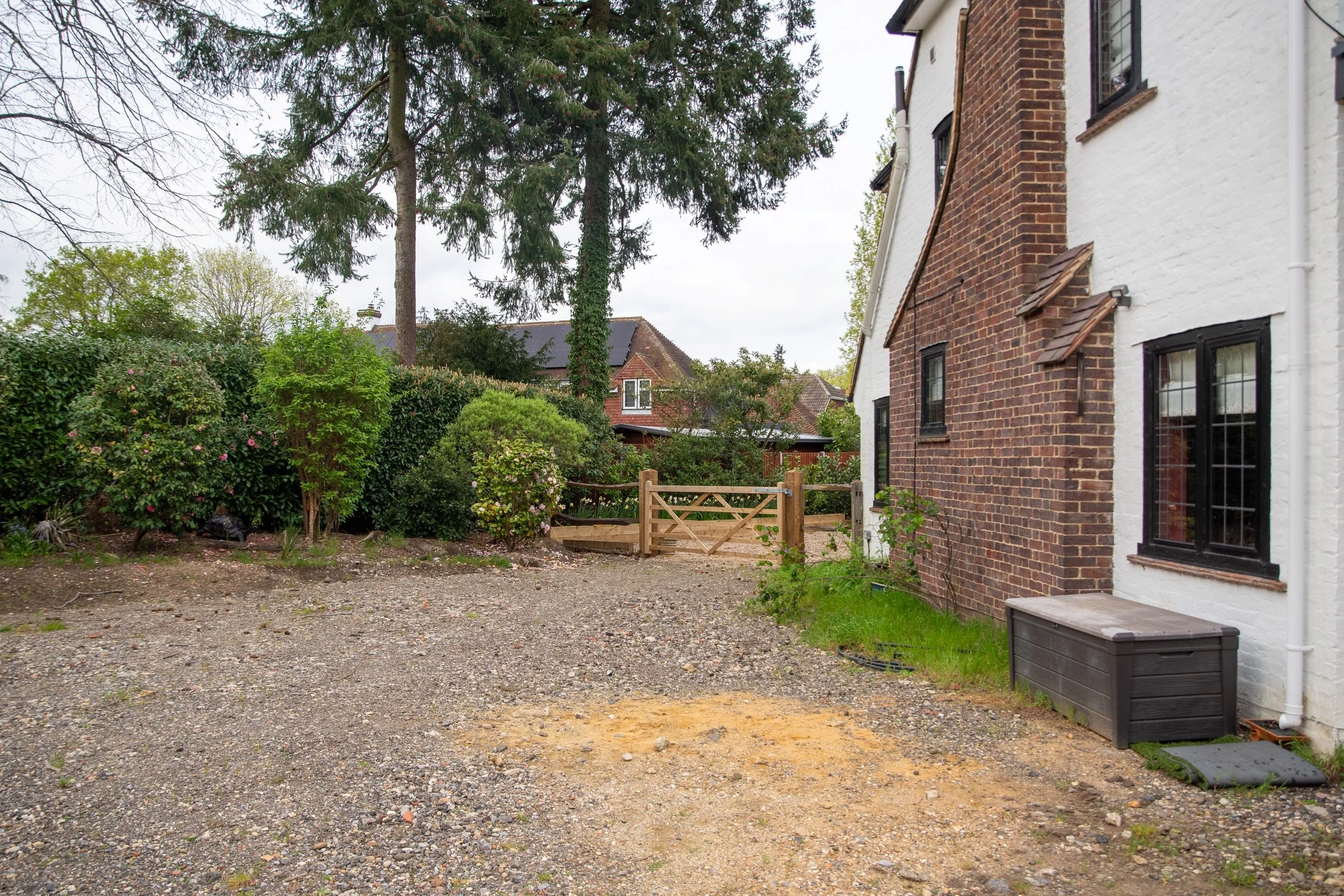
The old gravel and hardcore was scraped off this garden in Surrey and re-used as the sub-base for the new paths in this naturalistic garden in Surrey.
Chucking it in a skip sounds so much less effort doesn’t it? But old fencing taken away in a skip of mixed waste will end up in landfill. Is that what you want?
Choosing materials responsibly
Whilst we’re on the subject of hard landscaping materials, it helps to know their provenance. Every piece of paving, fencing, bag of compost or topsoil has a history, including the carbon, energy and sometimes human cost of getting it to your garden. With sustainability in mind it’s helpful to ask three questions: where does it come from, how long will it last, and what happens to it at the end?
Reclaimed materials
Lovely idea - old bricks, York stone, granite setts and salvaged timber avoid the energy of making something new, and they bring a patina that takes new materials ages to acquire. A reclaimed brick wall looks settled from day one. Depending on how you acquire these materials they may require some reworking which can take time. Old bricks can come with old mortar still attached, this will need to be chipped off before the bricks can be used. Old York stone is extremely heavy, requiring specialist handling equipment, it requires more skill in laying as it usually odd thicknesses, and, although rumour has it that crazy paving is making a comeback, I’ve yet to see any demand… Sourcing reclaimed materials is very satisfying for those who enjoy a good internet hunt. And good quality reclaimed materials are often reusable a number of times.
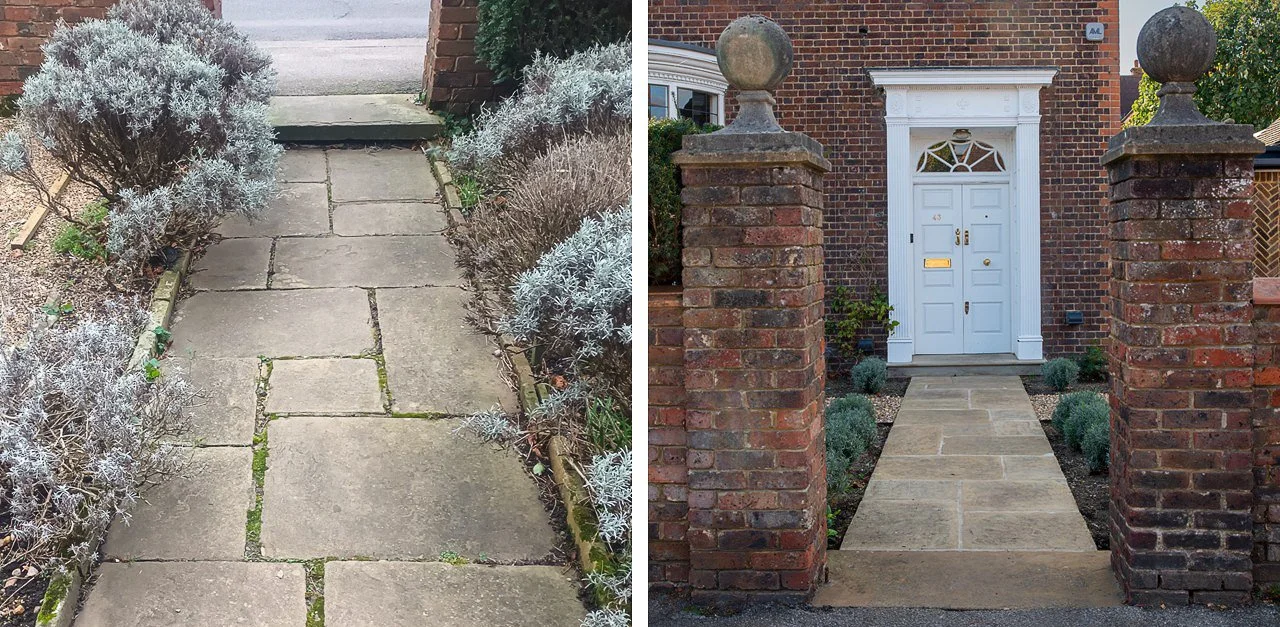
We lifted this old Yorkstone path in Wimbledon Village and re-laid it so it was level and slightly above the gravel driveway. A missing piece was sourced from a reclamation yard and everything was repointed. New pathway, same stone - it looks like it’s been there forever.
Timber
Sustainable timber needs to be FSC certified. This means it comes from well-managed forests that protect wildlife, ecosystems, and water, protect the rights of local workers and indigenous communities and is through every step of the supply chain from the forest to the final product. Even better, use UK-grown species such as oak, sweet chestnut and larch which are naturally durable without chemical treatment. When putting in decking many people make the choice of a quality hardwood for the bits you can see and a cheaper softwood for the structure. In these situations it is always the structure that fails - definitely a case of all fur coat and no knickers. Get the best materials you can afford, they will last longer and a have a better chance of re-use.
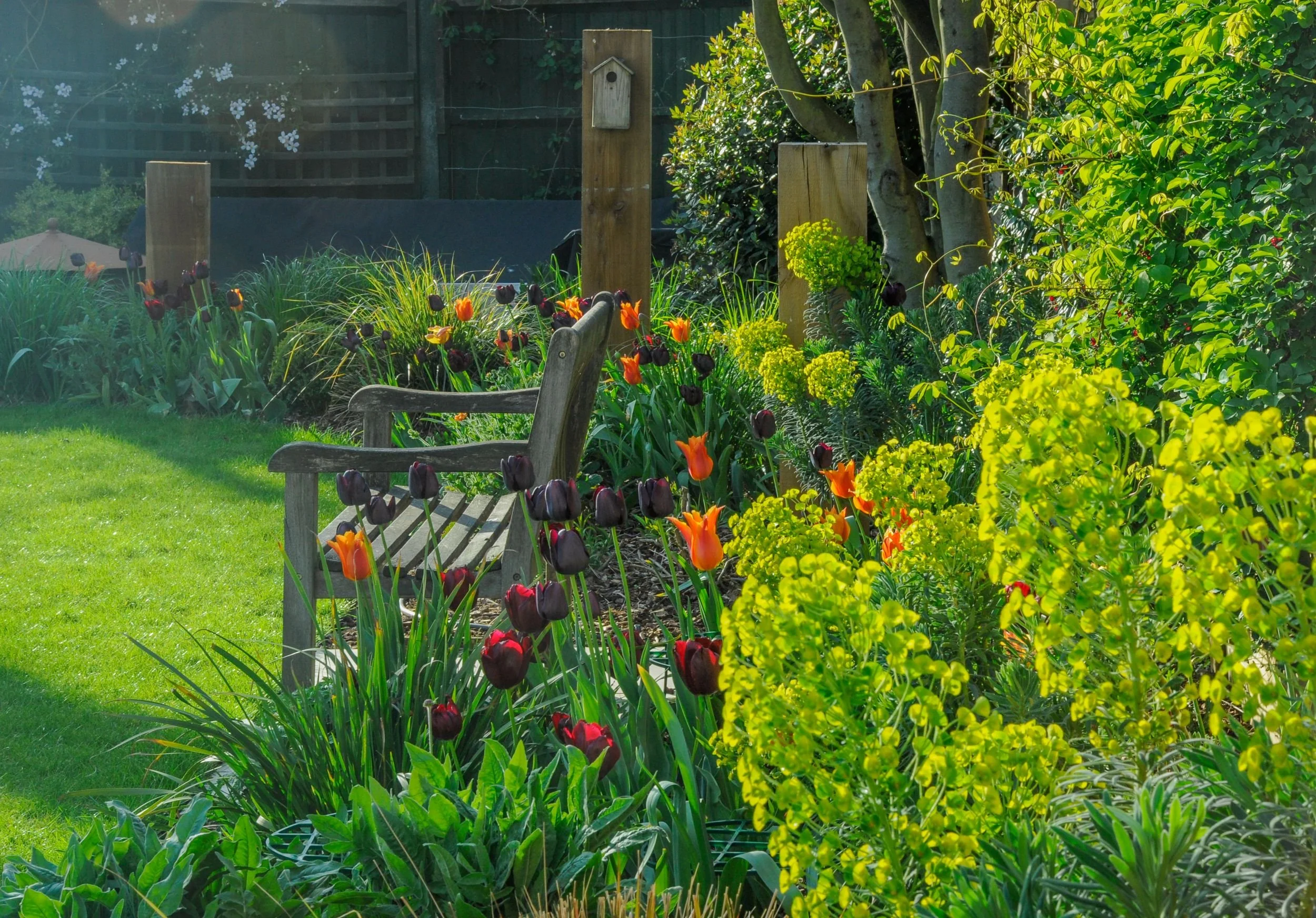
Some of these sleepers in this family garden in Raynes Park were repurposed from the previous garden design.
Stone and paving
Imported stone often arrives cheaply but travels thousands of miles, and some of it comes from quarries with poor labour conditions. Where I can, I specify British stone, and where I can’t, I aim to find stone with evidence of ethical sourcing. Gravel and permeable paving let rain soak in, which helps with drainage as well.
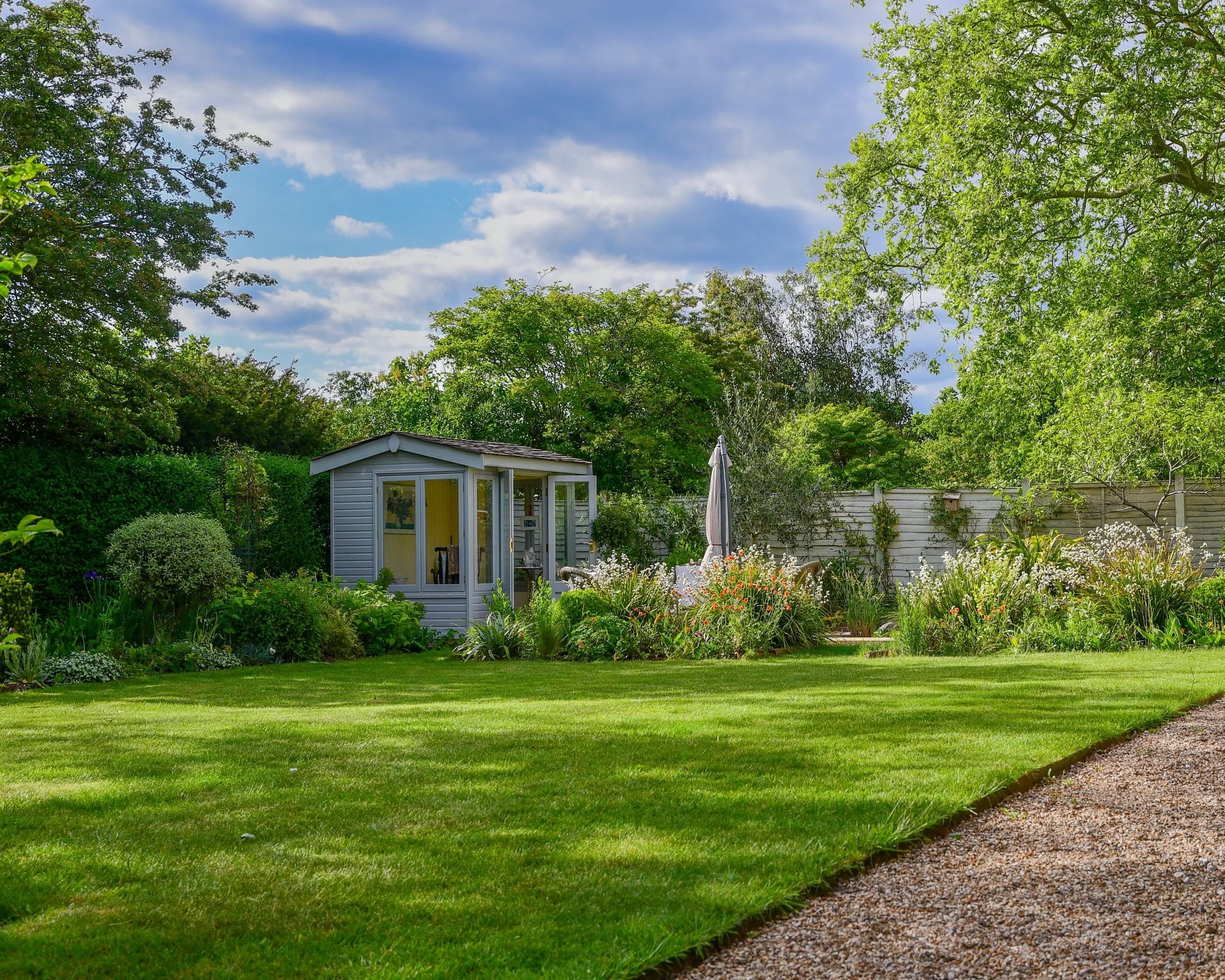
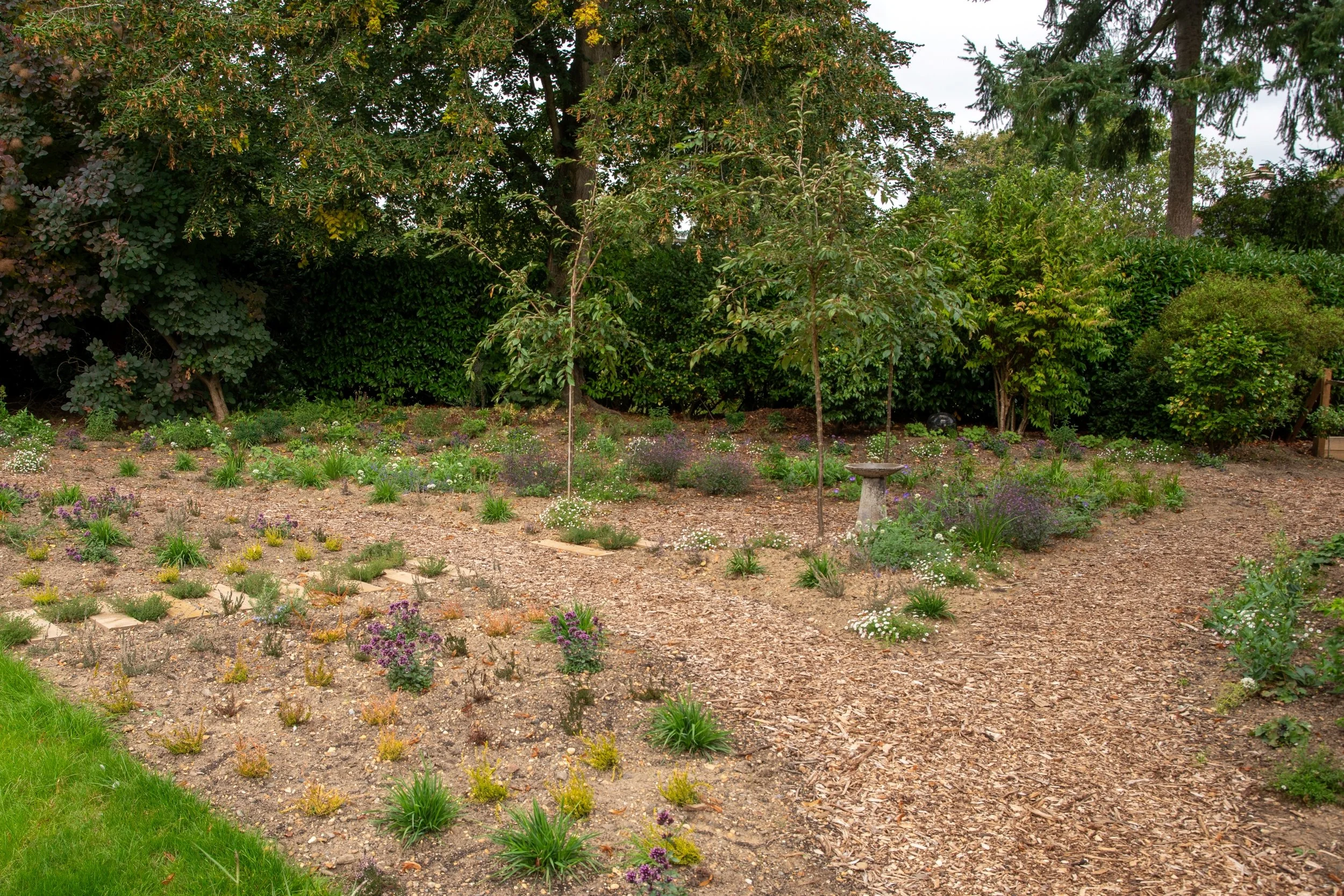
The gravel for these paths in Berkshire was from gravel pits just three miles away.
Gravel does eventually become colonised with weeds, requiring more maintenance, but is completely recyclable. Resin-bound gravel is a popular choice for driveways in London. It is moderately sustainable in that it allows water to drain through, is made with British aggregates and can last a long time, requiring little maintenance. But it does rely on synthetic, petroleum-derived plastic binders which make it difficult to recycle.
And what about porcelain paving? It’s popular because it requires very little maintenance. It doesn’t acquire any kind of patina with age but can be matched up with kitchen floors quite easily. It can last a really long time (25 to 50 years) so its lifetime carbon footprint compares favourably to concrete (but that’s not saying much). Responsible manufacturers increasingly use closed-loop production. Many tiles incorporate broken raw tile scraps, unfired clay, or recycled industrial ceramics directly back into the mix, conserving virgin raw materials. And it has Zero Toxic Emissions; unlike synthetic outdoor options, like artificial grass or certain resin-bound gravels, porcelain emits no volatile organic compounds (VOCs) and does not leach chemicals into the surrounding soil. So its sustainability profile is highly nuanced, combining a carbon-heavy manufacturing process with an eco-friendly, low-waste operational lifespan (as long as it doesn’t go out of fashion).
Concrete and plastics
Concrete has a high embodied carbon cost so I use it only where it’s really needed, such as foundations and structural walls. There are some concretes available now which don’t use conventional Portland cement. In many ways these alternatives are superior in terms of embodied carbon and strength. However, they often require specialist additives and are not as easy or cheap to use on small sites. But ask your designer and landscaper about them, with more demand the products will improve.
I will do my utmost to avoid using plastics. I use metal or timber edging, never plastic. I prefer not to use composite decking even though it is very low maintenance and can be re-used. These materials shed microplastics and are almost impossible to recycle, though composite decking could be reused.
Now let’s talk about artificial grass. Have I ever installed it? Yes. Have I regretted it? Yes, with one exception which I’ll explain. While manufacturers often market it as "eco-friendly" because it eliminates the need for watering, mowing, or chemical fertilisers, major environmental bodies like the WWF UK and the Royal Horticultural Society (RHS) warn that its overall ecological impact far outweighs these minor benefits. My professional body, the SGLD, pretty much bans me from using it.
Artificial grass is a disaster for local biodiversity, providing zero food, shelter or nectar for pollinators. It degrades the soil underneath, cutting off oxygen and nutrients. This destroys the complex ecosystem of worms, burrowing insects and microbes that keep soil healthy. In the UK we have 65 bee species which nest in the ground, but can’t in artificial turf. You can see this when you pull up old artificial turf - the soil is dead.
It also has a high carbon footprint as it is typically made of polyethylene, polypropylene of polyurethane - all petroleum-based plastics derived from fossil fuels. When natural topsoil and living grass are remove for its installation the carbon stored by those plants and soil microbes are released directly into the atmosphere.
Artificial grass sheds microplastics as it breaks down with sunlight and wear. The microplastics wash away into drainage networks, polluting rivers and ending up in fish and aquatic animals. Cheaper artificial turf can also leach VOCs and traces of heavy metals.
On hot summer days artificial grass can reach temperatures up to 20c higher than natural grass, making it hot enough to burn pets’ paws. Unlike living grass which cools the air through transpiration, plastic absorbs radiation. Real turf absorbs almost all rainfall. Some types of artificial grass cause over 50% of rainwater to run straight off the semi-impervious surface, which can worsen localized flooding.
Because of its complex construction it is practically impossible to recycle. It may be possible to re-use, but really, why would you?
And the one time I have seen it used without too much regret? A client used it to cover a manhole cover in the middle of the lawn. The cover was designed to be lost in a flowerbed but the client wanted more lawn. She tried painting the manhole cover black, then green, put a plant pot on it, but nothing looked right. A circle of artificial turf did the job. At least it’s not over soil.
Compost and plants
Peat-free compost is more readily available now than compost with peat. Buying UK-grown plants reduces the risks of importing pests and diseases. However, the bulk of our bulbs, perennials, shrubs and trees still come from Europe. Despite Brexit the UK growing industry is still not as large or comprehensive as that of the Netherlands, Belgium, Germany or Italy. All commercially grown plants now require plant passports which show complete traceability from producer to your garden. The ultimate in sustainability is harvesting and reusing your own seed and making your own compost of course.
Right plant, right place, for a climate that keeps changing
If I could give only one piece of advice, it would be this. The most sustainable plant is the one that thrives where you put it, with no extra watering, feeding or mollycoddling. The phrase was coined by Beth Chatto, and it's why Nicola Ferguson's Right Plant Right Place is the most thumbed book on my shelf. The right plant doesn’t need pesticides, artificial fertilizers or excessive watering. However, I have found with the recent very hot summers in London irrigation may be needed to get plants established. A drip system uses water more efficiently than a sprinkler or hose.
Whilst we’re on the subject of plants we can’t ignore the elephant in the room - plastic plant pots. Obviously it’s much better if we can buy plants in a sustainable packaging. Some nurseries, like the Hairy Pot Company, now sell plants in bio-degradable pots and some are going back to the old fashioned way of lifting plants in the dormant season and selling them bare root. Most trees and shrubs (particularly roses) are already sold like this in winter and they are usually much cheaper. Most new plastic pots are now a taupe colour. These can be recycled kerbside. Black plastic pots can’t be recycled currently - their carbon-black pigment absorbs the infrared light used by automated optical sorting machinery. But all plastic pots can be reused.
Soil: the unglamorous foundation
Most of the gardens I work on sit on London clay - like glue in winter and concrete in summer. In a wet winter it's waterlogged and compacted, and in a dry summer it shrinks and cracks. Yet properly managed, clay is actually a fertile soil that holds moisture, which is exactly what plants need in a drought.
"Properly managed" means adding organic matter every year, ideally as a mulch on the surface rather than dug in, and only working the soil when it's neither sodden nor baked. It takes several seasons, and it's not exciting, but healthy soil is the best insurance against both drought and flood. Making your own compost is easy, and it keeps waste out of the bin.
Working with what you have is cheaper and better than importing loads of topsoil or grit, and creates a nice circular re-use of materials from your own garden.
Water: too much and too little
A sustainable garden design has to cope with both. On the "too little" side, water butts are a start but rarely hold enough to last a summer. If you can afford it, and have the space, linked storage or larger tanks will help capture rainwater. Planting areas can also be shaped so that rain running off paving is directed into the borders rather than down the drain, and mulching keeps moisture in the soil.
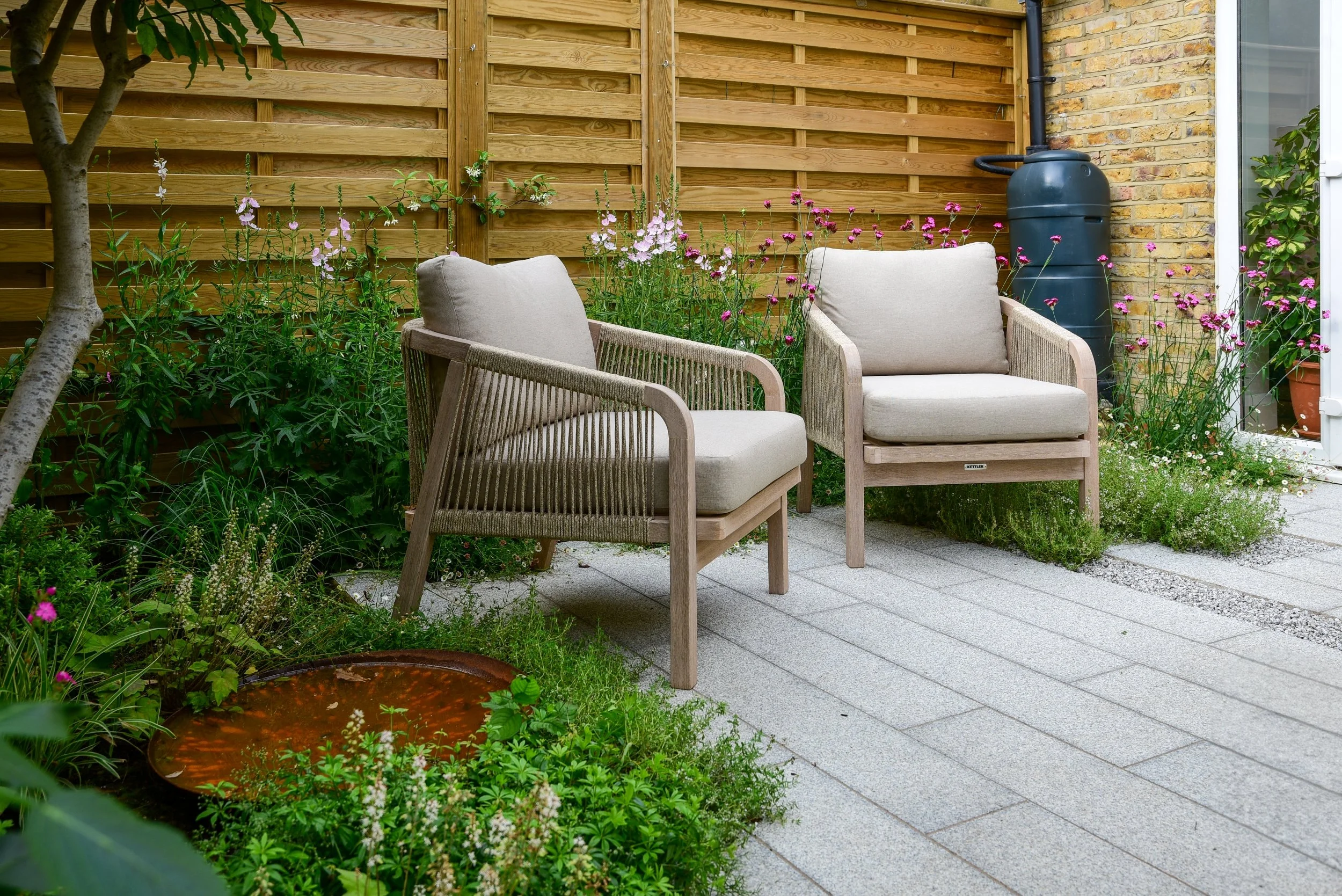
A new waterbutt in this tiny courtyard in Twickenham helps keep the waterbowl filled, cleans the dog’s paws after a muddy walk and can keep the garden watered for much of the year.
Irrigation is more contentious. Systems are usually exempt from hosepipe bans and keep plants consistently watered. But I worry that gardeners lose touch with their gardens when technology does all the work, and in London there's always a fox with a taste for chewy pipes. My compromise is to use irrigation for the first couple of years in a new garden, then let the plants fend for themselves.
On the "too much" side, I design paved areas as permeable (like gravel or compacted gravel) that will absorb water or with a fall so water drains off to flowerbeds rather than racing into the drains. Ponds and water features slow and hold water too, and they're wonderful for wildlife. I’ve yet to try designing swales which will hold large amounts of water temporarily but these have become more widely used, for example in the Queen Elizabeth II Garden and also in the new garden in Grosvenor Square.
Wildlife and food
A garden that's a sterile green box isn't sustainable. Variety in planting, structure and shelter, a source of water, gaps in fences for hedgehogs and fewer chemicals all help, and none of it requires a wilderness. Some of the best wildlife gardens I know are formal and tidy. Early flowers matter too, which is one reason I love snowdrops and crocuses. Indeed winter-flowering plants in general are really useful for pollinators flying on mild days in the middle of winter.
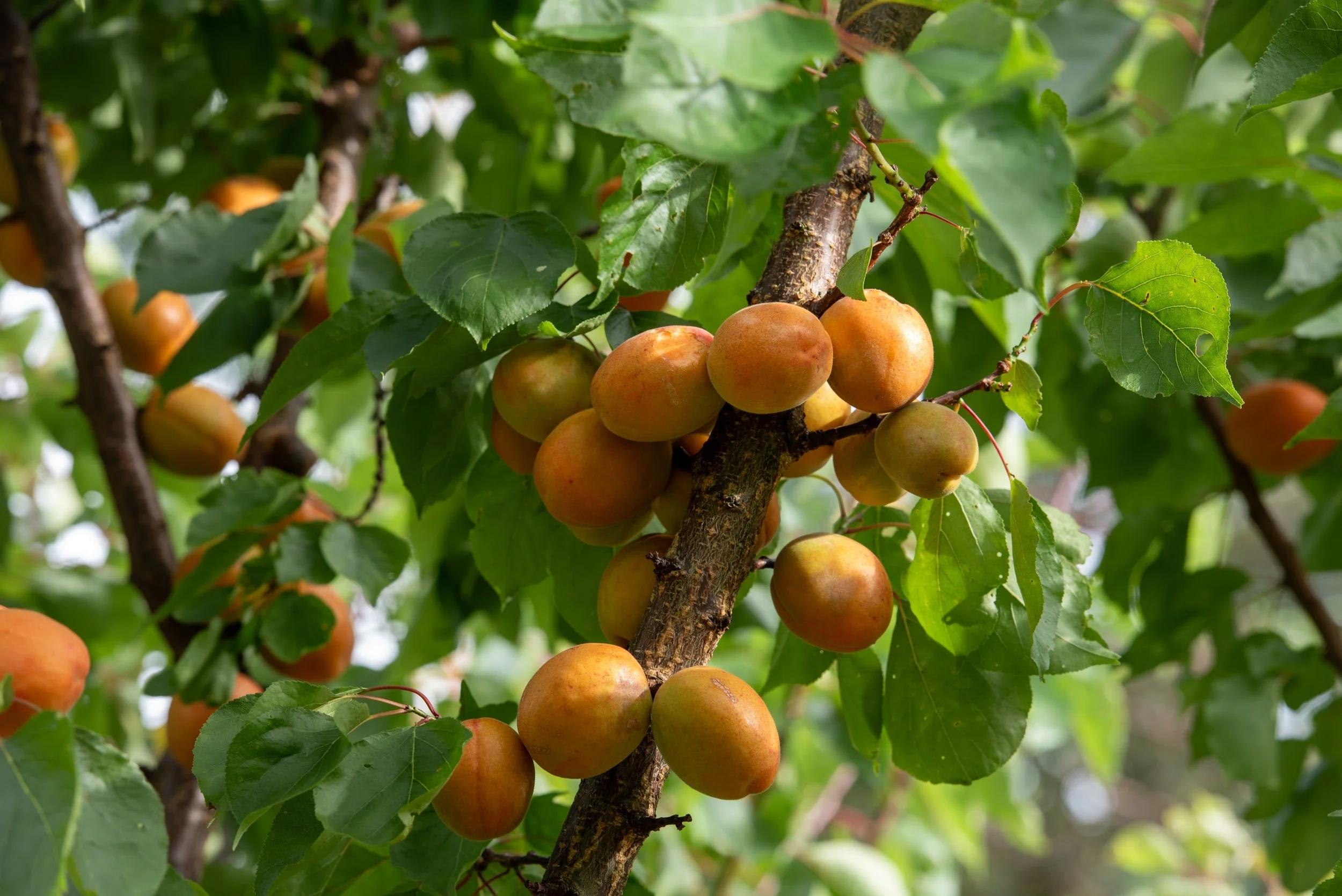
Warmer summers and milder winters means clients can grow food like these apricots in a garden I designed in Raynes Park. Three years from whip to fruit.
Growing food counts as well, and you don't need an allotment, though many people love them. I have one client growing grapes, figs, apricots and Asian pears in a London garden, they were all designed in. For those of you growing grapes in London you can take part in Château Tooting, a community-made urban wine produced by a South London collective.
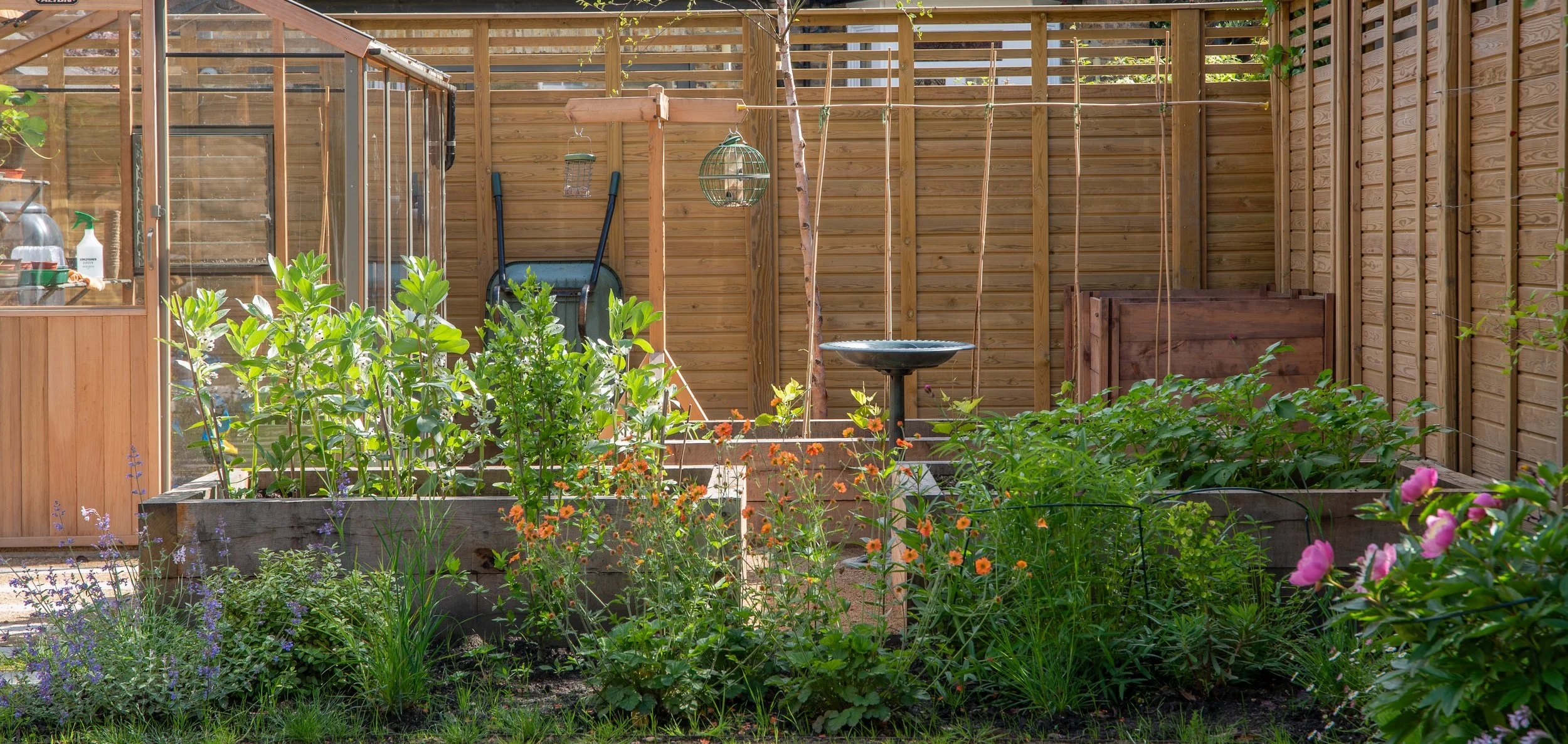
A greenhouse for propagating plants and growing tomatoes, raised vegetable beds, a new tree, water butt, compost bins, a bird bath, plants for pollinators and people. All designed-in for a garden in Wimbledon.
Sustainable for people, too
It’s easy to forget that a sustainable garden design should be for people too. A garden is only sustainable if people actually use it and look after it. A design that demands constant work from a busy household will be neglected and eventually replaced, and the cycle of waste starts again.
Much as I think "low maintenance" can be interpreted as a garden for lazy people, it is really a mental health feature, as I explored in Mental health and well-being benefits of garden design. A garden that is difficult or time-consuming to look after will become neglected pretty quickly. Whilst you might choose to describe a neglected garden as “wildlife friendly” at some point it will get ripped out and started again. That is hardly sustainable in the long run. A well-designed garden is structured so that it carries itself through the seasons, with planting that genuinely wants to be there. It should work for you on your worst days as well as your best.
There's even a small sustainability bonus: a garden that draws you out to potter, mow and prop up a leaning rose is moderate exercise dressed up as pottering, which is probably the most sustainable kind of gardening.
So where do you begin?
You don't need to do everything at once. Mulch a border, create a compost bin and use it, swap plants, put in a water butt, make an undisturbed space for wildlife, put up a bird or bat box (in the right place), plant a tree, indeed plant more in general. Don’t build on your garden (controversial!), and try and keep plastics out. Reduce, reuse, recycle …
Frequently asked questions
Does a sustainable garden have to look wild or messy?
Not at all. Sustainability is about how a garden works, not how it looks. Formal, structured gardens can be excellent for wildlife and resources as long as the planting is varied and the soil and water are well managed.
How do I improve my London clay soil in a sustainable way?
Slowly. Add organic matter such as compost, well-rotted manure or leaf mould every year as a surface mulch, and avoid working the soil when it's very wet or very dry. The structure improves significantly over several seasons.
Is artificial grass ever a sustainable choice?
No.
Does a garden need to be big to be sustainable?
No. A courtyard, terrace or even a balcony can be more sustainable. What matters is intention: the right plants, some shade, growing food for yourself or pollinators, and reducing your use of tap water, and plastic.
Do I need to redesign my whole garden to make it more sustainable?
Not necessarily. Improving soil, using site-appropriate plants, making the garden more usable as a space you would enjoy, would all make a real difference. A proper design review would identify easy wins and areas for significant improvements and probably save time, money and frustration.
Can I measure how sustainable my garden is?
Yes, there are a number of online tools you can use:
RHS Green Garden Calculator: A free 10-minute online quiz provided by the RHS that scores your garden on climate and wildlife-friendliness, offering tailored advice.
GardenUp App: A research-backed digital tool that evaluates private spaces across ecological, social, and economic metrics while tracking ground structure and sealed areas.
I have access to the new Farm Carbon Toolkit which has been adapted by the SGLD for use in gardens. I’ve yet to use it fully and look forward to working with a new client who is really interested in increasing the sustainability of their garden design.